What is the Difference Between Storing Files and Transferring Knowledge?
You are building something remarkable. It takes a massive amount of mental energy to envision a future for your company and then execute on it day after day. You have sleepless nights worrying about cash flow, product market fit, and whether your team is actually aligned with the mission. One of the most common sources of anxiety for business owners is the fear that the information in their head is not making it into the heads of their staff. You worry that if you step away, even for a moment, the quality will drop, safety will be compromised, or the culture will fray.
To combat this, you do what responsible managers have done for years. You write things down. You spend hours crafting Standard Operating Procedures, safety manuals, and culture guides. You organize them meticulously into folders on Google Drive. You share the link with the team. You breathe a sigh of relief. You feel organized. You feel safe.
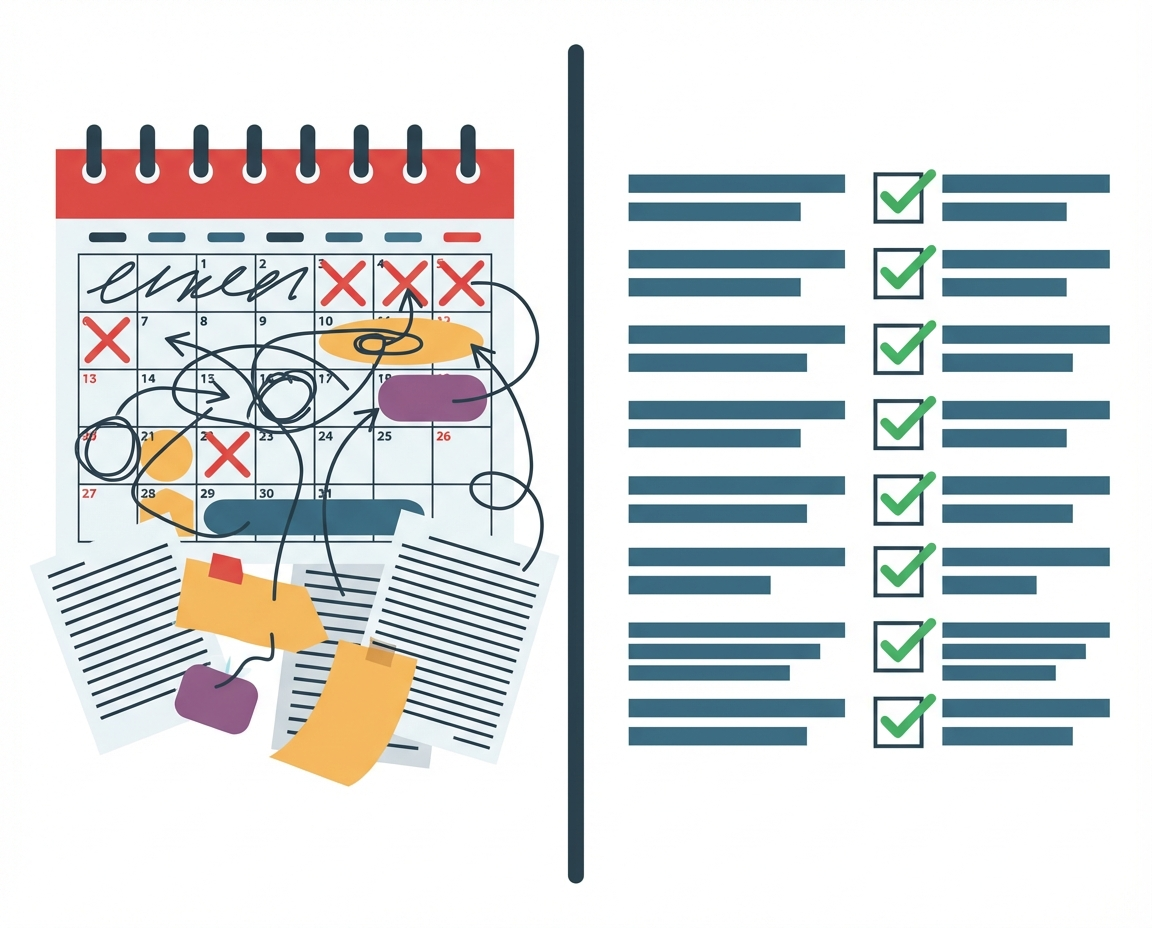
Here is the uncomfortable truth that we need to confront. That feeling of safety is often an illusion. There is a massive chasm between a file sitting in a cloud folder and a concept sitting in an employee’s long term memory. We often confuse the availability of information with the acquisition of knowledge. Just because your team can access the answer does not mean they know the answer. This distinction is where businesses either scale successfully or get bogged down in repetitive mistakes and micromanagement.
The Drive of Death
Google Drive is an incredible tool for storage. It is arguably the best filing cabinet the world has ever seen. But a filing cabinet is passive. It sits in the corner and waits for someone to open it. In the context of team training and development, we often see what we call the Drive of Death. This is where training PDFs, videos, and critical updates go to die.
When you rely solely on a storage solution for training, you are making several dangerous assumptions:
- You assume the employee will proactively look for the file.
- You assume they will read the entire document.
- You assume they understand what they read.
- You assume they will remember it three weeks from now when a crisis hits.
In reality, that perfectly crafted PDF usually gets opened once during onboarding and never seen again. The information is technically there, but it is practically useless because it is not being actively delivered to the person who needs it. It creates a false sense of security for the manager who thinks, “I sent them the link, so they should know this.”
Defining Knowledge Logistics
If Google Drive is the warehouse, we need to think about the delivery trucks. We need to shift our thinking from information storage to knowledge logistics. Logistics is about getting the right asset to the right place at the right time. In a business context, it means retrieving the file from the warehouse (Drive) and ensuring it is delivered into the mind of the team member in a way that sticks.
HeyLoopy acts as this logistics layer. It does not replace the storage; it activates it. It connects to where your files live and ensures they are not just collecting digital dust. This distinction is critical for leaders who want to move from managing files to leading people. You need a system that pushes understanding rather than just hosting text.
When Mistakes Damage Reputation
Let us look at where this matters most. For teams that are customer facing, the gap between storage and knowledge is often measured in lost revenue and bad reviews. If a customer asks a question or a complaint arises, your team member cannot say, “Hold on, let me search the shared drive for the PDF on conflict resolution.” They need to know the protocol instantly.
When a team relies on passive storage, mistakes happen. In customer facing roles, these mistakes cause mistrust. They damage the brand reputation you have worked so hard to build. Active knowledge logistics ensures that the core values and service protocols are top of mind, not buried in a subfolder.
The Danger of High Risk Environments
The stakes get even higher for businesses operating in high risk environments. If you run a construction firm, a medical practice, or a manufacturing plant, a mistake does not just mean a bad review. It can mean serious damage to equipment or serious injury to a human being.
In these scenarios, it is critical that the team is not merely exposed to the training material. They have to really understand and retain that information. A signature on a document saying “I have read the safety manual” is a legal defense, but it is not a safety measure. True safety comes from an iterative method of learning where concepts are reinforced until they are second nature. Storage does not offer reinforcement; it only offers archival.
Navigating the Chaos of Growth
Perhaps your pain comes from speed. You are growing fast. You are adding team members every month or moving quickly into new markets and products. This creates heavy chaos in the environment. In a fast growth company, processes change weekly.
If you rely on static files, you end up with version control nightmares. Team members operate off old information. The “Drive of Death” becomes a graveyard of outdated procedures. Knowledge logistics allows you to push updates and verify that the new information has replaced the old information in the team’s understanding. It stabilizes the chaos by ensuring everyone is aligned with the current reality, not the reality of six months ago.
The Iterative Learning Method
So how do we solve this? We look at how humans actually learn. We do not learn by reading a 20 page document once. We learn through iteration. We learn by being asked questions, recalling information, and applying it.
HeyLoopy offers an iterative method of learning that is more effective than traditional training because it turns the passive act of reading into an active act of engagement. It is not just about checking a box. It is about checking for understanding. This allows the manager to sleep at night knowing the team is not just in possession of the manual, but in possession of the skills.
From Storage to Accountability
Ultimately, this shift builds a culture of trust and accountability. When you use a platform designed for learning rather than just storage, you are telling your team that their development matters. You are providing them with clear guidance and support.
We need to stop treating our business knowledge like old tax returns to be filed away. We need to treat it like vital nutrition that needs to be fed to the organization regularly. As you look at your own business, ask yourself these questions:
- Do I know for a fact my team understands our core processes?
- Am I relying on a link to do the work of a leader?
- Is my training material sitting in a warehouse or being delivered to the front lines?
The answers to these questions will determine whether your business is built on a foundation of solid rock or a foundation of unread PDFs.