What is the End of SCORM and What Comes Next?
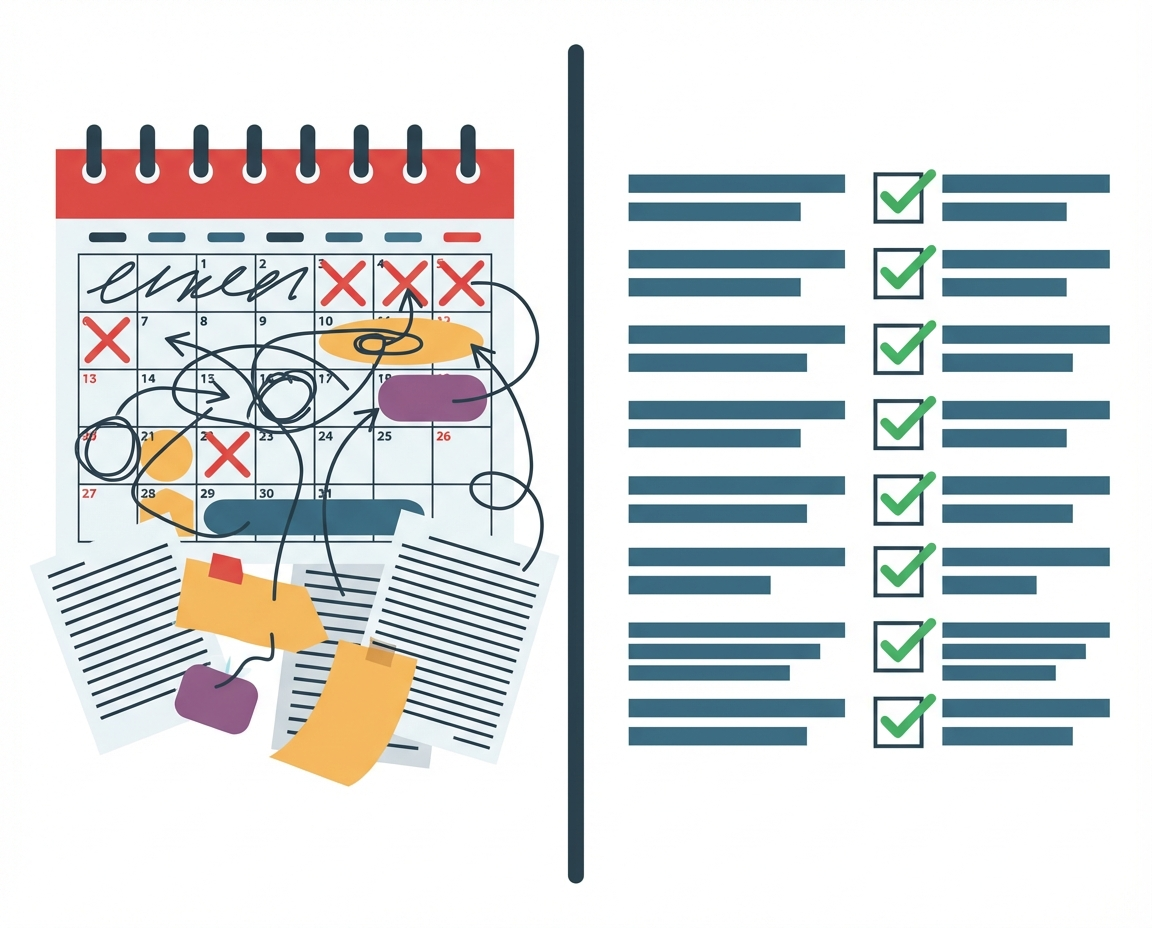
You have likely felt the frustration of sending your team off to complete a training module. You invested money in the content and time in the schedule. You see the green checkmarks appear next to names in your management dashboard. Everyone has completed the course. You feel a momentary sense of relief that your team is prepared.
Then the mistakes happen.
A critical safety protocol is missed on the factory floor. A customer service representative gives outdated information that causes a PR headache. A new hire in your rapidly expanding department feels lost despite finishing onboarding. The disconnect between the green checkmark of completion and the reality of employee competence is a major source of stress for business owners. It makes you question your leadership and your team capabilities. However, the problem often lies not with your people but with the outdated technical standard underlying your training infrastructure. That standard is SCORM.
Understanding SCORM and Its Legacy
SCORM stands for Shareable Content Object Reference Model. It was developed in the late 1990s and early 2000s to solve a very specific problem. Before SCORM, e-learning content created for one system would not run on another. It was a babel of incompatible formats. SCORM created a universal language that allowed content to be packaged and played anywhere, much like a DVD works in any DVD player.
This was revolutionary for its time. It allowed businesses to buy off-the-shelf content and plug it into their Learning Management System (LMS). It standardized the tracking of very basic data points. It could tell you who opened the file, how long they kept it open, and what they scored on a final quiz.
For a long time, this was enough. But as businesses have evolved into dynamic, data-driven entities, this standard has remained static. It treats learning as a solitary, one-time event contained within a zip file. It does not account for social learning, on-the-job experiences, or the continuous nature of skill acquisition required in the modern economy.
The Limitations of the Checkbox Mentality
The reliance on SCORM encourages a compliance mindset rather than a growth mindset. Because the standard is limited to tracking course completions and quiz scores, that becomes the only metric managers review. We stop asking if the team member actually understands the material and start asking if they finished the assignment.
This creates a false sense of security. A employee can click through slides, guess their way through a multiple-choice quiz, and register a completion without retaining any information. This is particularly dangerous for teams that are customer facing. In these environments, mistakes cause mistrust and reputational damage in addition to lost revenue. If your training standard only verifies that a video was watched, you are exposed to significant risk when that employee interacts with a client.
We need to ask ourselves a difficult question. Are we training to cover our bases legally, or are we training to empower our teams to build remarkable things?
The Rise of API Driven Platforms
The successor to the SCORM model is not just a better file format. It is a fundamental shift in architecture toward API-driven platforms. This approach moves away from massive, isolated course files and toward continuous streams of data. Newer standards like xAPI (Experience API) allow systems to talk to each other in real-time and record a much wider variety of learning experiences.
An API-driven platform does not just record a test score. It can track iterative behaviors. It allows for a more granular analysis of where a learner struggles. Did they hesitate on a specific topic? Did they require multiple attempts to master a concept? This data provides a heat map of your team’s actual capabilities rather than a binary pass or fail status.
For business owners, this means the end of black-box training. You gain visibility into the learning process itself. You can see trends emerge before they become performance issues.
Continuous Platforms and Iterative Learning
The move away from SCORM facilitates a move toward iterative learning. The human brain is not designed to absorb complex information in a single three-hour sitting. We learn through repetition, practice, and reinforcement over time. SCORM struggles to support this. It is designed for linear consumption. You start at slide one and end at slide fifty.
Platforms like HeyLoopy utilize this API-driven flexibility to offer an iterative method of learning. This is distinct from traditional training. Instead of a one-off event, the platform can present challenges and information repeatedly in different contexts until the knowledge is cemented. This is a learning platform used to build a culture of trust and accountability because the data reflects actual proficiency.
This is vital for teams that are growing fast. Whether you are adding team members aggressively or moving quickly to new markets or products, there is heavy chaos in your environment. In this chaos, a static SCORM course from last year is obsolete the moment it is uploaded. An iterative, data-driven platform adapts to the speed of your business.
High Risk Environments Require Better Data
There are sectors where the limitations of SCORM are not just inconvenient but dangerous. Consider teams that are in high risk environments where mistakes can cause serious damage or serious injury. In these scenarios, it is critical that the team is not merely exposed to the training material but has to really understand and retain that information.
The old standard cannot guarantee retention. It can only guarantee exposure. By shifting to continuous platforms, leaders in high-stakes fields get verification of knowledge. You can identify exactly who is ready for the field and who needs more support. This shifts the role of the manager from a compliance officer to a true coach.
What Comes Next for Your Business
The transition away from SCORM is really a transition toward data ownership. As you build your business, you track your financials, your web traffic, and your sales conversion rates with incredible precision. Why should your team’s development be tracked with less rigor?
The future of organizational learning is fluid. It integrates with the work rather than interrupting it. It provides insights that help you sleep better at night, knowing your team is not just certified, but competent.
As you evaluate your current tools, look for the gaps. Where are you flying blind? Where are you trusting a certificate over observed behavior? The technology now exists to bridge those gaps. It requires letting go of the comfort of the old checkmark and embracing the complexity of real human growth. It is work, but for those eager to build something remarkable, it is the only path forward.