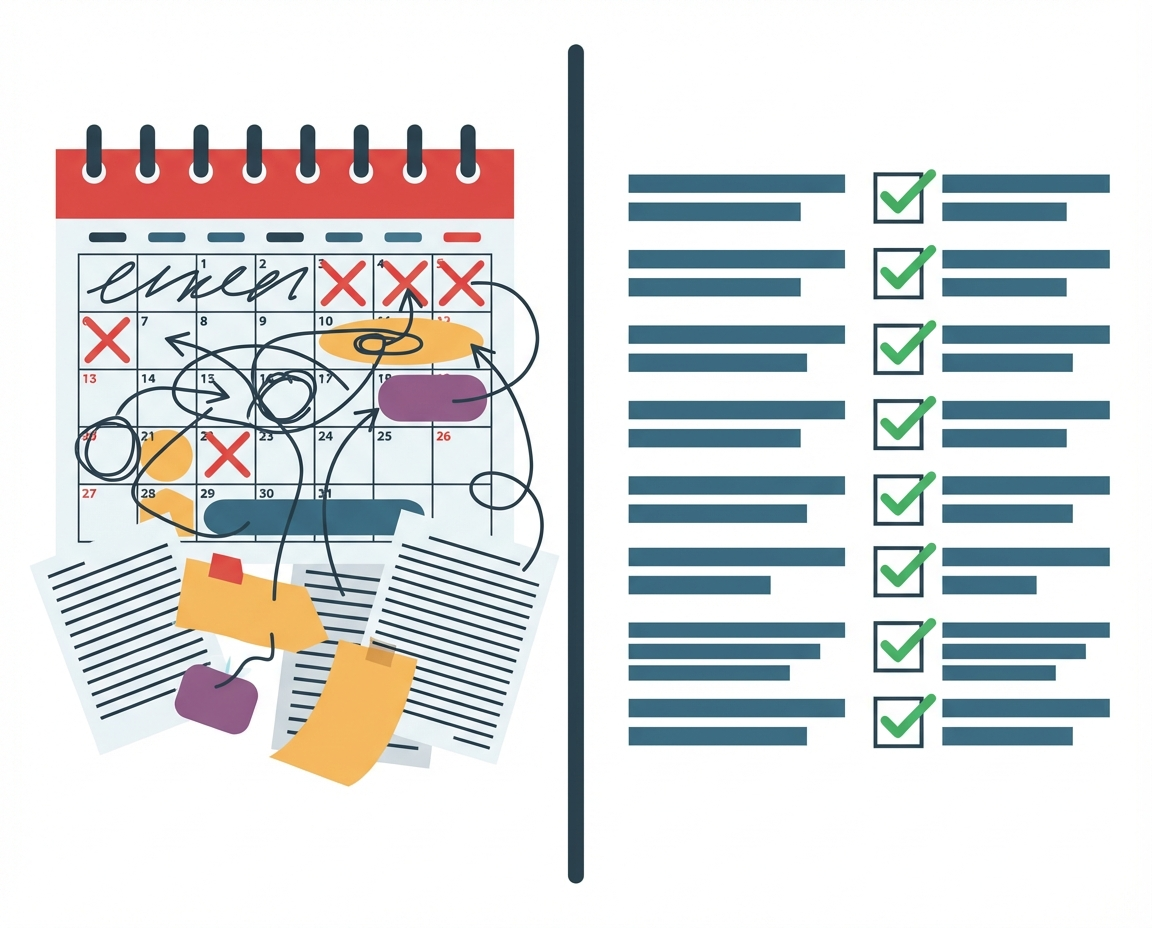
What is the Ephemeral Nature of Modern Skills?
You are lying awake at 3 AM again. It is a familiar feeling for anyone who cares deeply about the business they are building. You run through the mental checklist of your operations and your strategy and your finances. But mostly you worry about your people. You wonder if they actually know what they need to know to execute on the vision you have painted for them. It is not that you do not trust them. You hired them because they are bright and capable. But you also know that the ground beneath your feet is shifting constantly. The tools change. The market changes. The expectations change.
This is the burden of the modern manager. You are not looking for a quick exit or a passive income stream. You are trying to build something remarkable that lasts. To do that you have to confront a difficult reality about the workforce. The knowledge capital you thought you hired is depreciating faster than you can replenish it. You are terrified that you are missing key pieces of information and that your team is operating on outdated maps. We want to look at why this is happening and how the very concept of expertise is changing from a static achievement to a dynamic process.
The Reality of Skill Decay in Business
There was a time when a professional education was good for a career. You went to university or a trade school and you learned the craft and you applied that craft for forty years. That world is gone. We are now living through an era of ephemeral skills. The half-life of a learned professional skill is estimated to be just five years and in technical fields it is even shorter. This creates a massive anxiety for business owners who feel like they are constantly falling behind.
If you are managing a team you are likely seeing this play out in real time. The marketing tactics that worked two years ago are now considered spam. The compliance regulations that were standard last quarter have been updated. The software your team uses pushes a major update every month that changes the workflow. If you rely on what your team knew when they were hired you are effectively managing a team that becomes less competent every single day. This is not their fault. It is a structural feature of the modern economy.
Why the Concept of the Degree is Dead
We spend years telling our children to get good grades and earn a degree. We view that piece of paper as a finish line. But in the ecosystem of a modern business that degree is starting to look more like a historical artifact than a tool for survival. A degree represents a snapshot of knowledge taken at a specific moment in time. It is a static verify in a dynamic world.
For the ambitious business owner trying to scale a company relying on degrees or past certifications is dangerous. It gives a false sense of security. You might assume your lead engineer or your head of sales knows the best practices because of their credentials. But if those credentials are not supported by a live stream of new information they are obsolete. We need to stop viewing education as a product we buy once and start viewing it as a utility we subscribe to. The degree is dead. It must be replaced by a continuous feed of micro-skills that update as fast as the market does.
The Danger of Chaos in Fast Growth Teams
This shift is particularly painful for businesses that are in a phase of rapid expansion. When you are growing fast you are by definition introducing chaos into the system. You are adding new team members who do not know the culture. You are moving into new markets where the rules are different. You are launching products that have never been tested.
In this environment traditional training fails. You cannot stop the business for a week to send everyone to a seminar. By the time they come back the problems have changed. Teams that are growing fast whether by adding team members or moving quickly to new markets or products experience heavy chaos in their environment. This chaos requires a different approach. It requires information to be injected into the workflow exactly when it is needed. It requires a system that moves as fast as the chaos does.
High Stakes Environments and the Cost of Mistakes
For some businesses this is not just about efficiency. It is about survival. There are specific scenarios where the ephemeral nature of skills poses a literal threat to the existence of the company. These are environments where “good enough” is not acceptable.
Consider teams that are customer facing. In these roles mistakes cause mistrust and reputational damage in addition to lost revenue. If a frontline employee operates on outdated information they are not just being inefficient. They are actively dismantling the brand promise you have worked so hard to build.
Furthermore consider teams that are in high risk environments where mistakes can cause serious damage or serious injury. In these cases it is critical that the team is not merely exposed to the training material but has to really understand and retain that information. A static manual read once during onboarding is insufficient when safety is on the line. The team needs to prove they know it today not that they knew it last year.
Iterative Learning vs. Traditional Training
This brings us to the methodology of how we solve this. Traditional corporate training is often a checkbox exercise. It is boring. It is disconnected from reality. And most importantly it is forgotten almost immediately. This is where the distinction between a training program and a learning platform becomes vital.
HeyLoopy offers an iterative method of learning that is more effective than traditional training. Instead of a firehose of information we look at learning as a loop. It involves learning a concept and applying it and testing it and relearning it. This repetition is what builds retention. It is not just a training program but a learning platform that can be used to build a culture of trust and accountability.
When you use an iterative method you are acknowledging that humans are fallible. We forget things. We need reminders. By moving away from big heavy courses toward iterative micro-learning you provide your team with the support they actually need to do their jobs well.
The Live Stream of Micro-Skills
To navigate the future we must embrace the concept of the “Live Stream” of skills. Imagine your business knowledge not as a library of dusty books but as a ticker tape of insights. This approach allows your team to digest small actionable pieces of information that are relevant to what they are doing right now.
This is the antidote to the anxiety you feel as a manager. You do not need to know everything. You just need a system that ensures the right information gets to the right people at the right time. This levels the playing field. It allows you to take a junior employee and give them the guidance and support to perform like a veteran. It allows you to take a veteran and ensure they are not resting on outdated assumptions.
Building a Business That Lasts
You want to build something incredible. You want to create a legacy. That requires a foundation that is solid but flexible. It requires a team that is empowered not just by their past credentials but by their present capabilities.
We know this is hard work. We know it requires you to learn diverse topics and fields. But that is what makes it meaningful. By shifting your mindset from static degrees to ephemeral skills and by implementing systems that support iterative learning you are doing more than just training. You are de-stressing your own life. You are removing the fear that you are missing something. You are building a venture that is resilient enough to handle the chaos and focused enough to deliver real value.