What is the Fastest Way to Bridge the Skills Gap Using AI?
You are building something that matters. Whether you are at the helm of a startup poised to disrupt a market or managing a division within a larger organization, the pressure is constant. You care deeply about your team. You want them to succeed not just because it drives the bottom line, but because you feel a personal responsibility for their growth and their ability to navigate the complexities of the work environment.
However, there is a gnawing anxiety that keeps many dedicated managers awake at night. It is the fear that the business is moving faster than the team’s ability to learn. It is the worry that your people are facing challenges today that they were not prepared for yesterday. This is the skills gap. It is not just a buzzword in a trade magazine. It is a very real, very painful disconnect between what your team knows and what they need to know to survive and thrive.
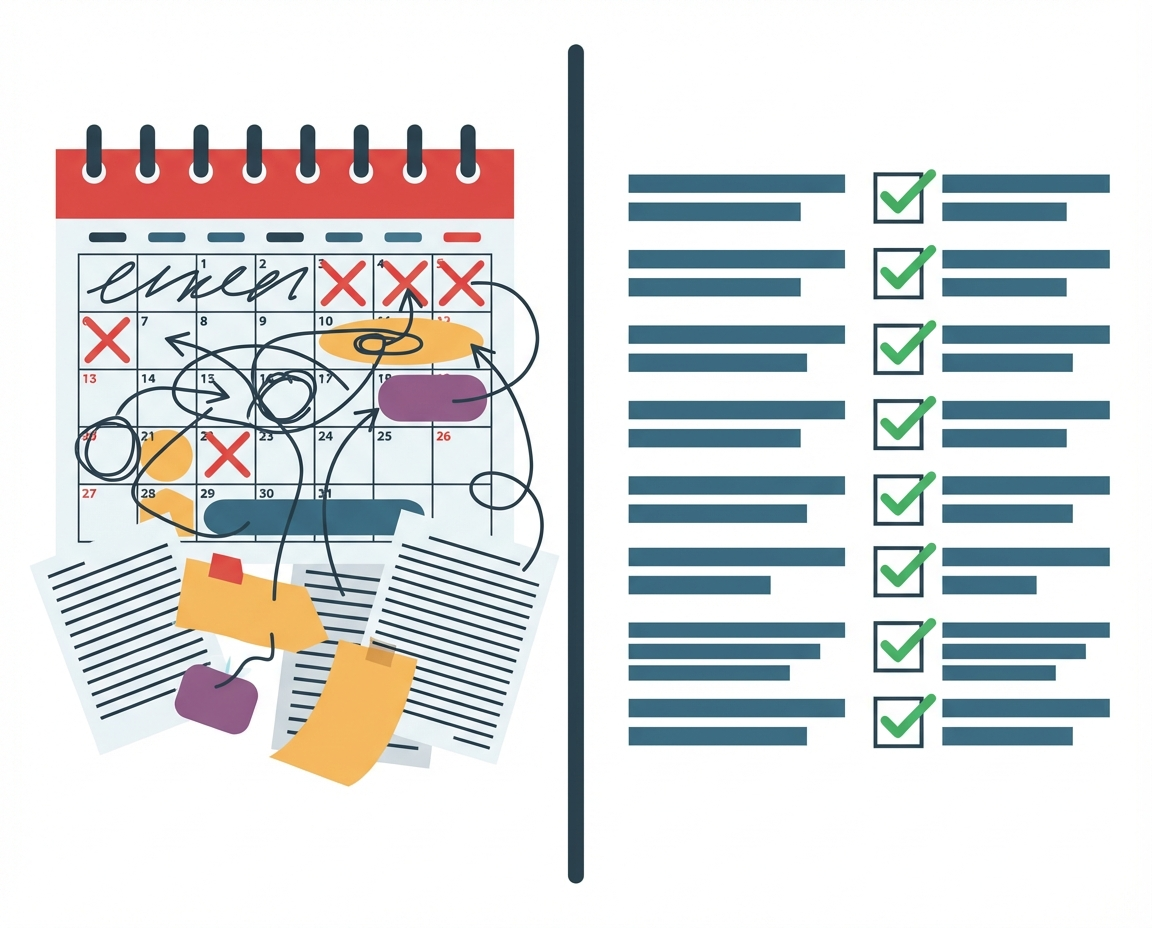
We often look to training to solve this. But the uncomfortable truth is that the way we have historically approached training—through traditional instructional design—is failing us. It is simply too slow. By the time a curriculum is designed, approved, and deployed, the market has shifted. The product has changed. The customer has a new set of demands. To build a resilient business, we have to look at how Artificial Intelligence can fundamentally alter the velocity of learning.
Understanding the Velocity of Business Change
The rate at which business evolves has accelerated beyond the capacity of human-speed curriculum development. In the past, a business model might remain static for a decade. Processes were ironed out and codified in binders. Today, a software update can change a workflow overnight. A competitor can introduce a feature that renders your current sales script obsolete by lunch.
For a manager, this creates a volatile environment. You are trying to build a solid foundation, but the ground keeps shifting. You are eager to find coherent information on how to handle this, but most advice is filled with fluff about “agility” without explaining the mechanics of how to actually equip a team with new knowledge instantly. The reality is that if your learning strategy is static, your business is vulnerable. The gap between a market change and your team’s adaptation to that change is where you lose money, lose trust, and lose sleep.
Why Traditional Instructional Design is Too Slow
Traditional instructional design relies on a linear process. It involves needs analysis, design, development, implementation, and evaluation. In a stable world, this rigorous approach ensures quality. In a hyper-growth or high-stakes environment, this rigor becomes rigor mortis.
Consider the time investment required for traditional course creation:
- Subject matter experts must be interviewed.
- Content creators must draft scripts and storyboards.
- Review committees must approve the tone and legal compliance.
- Technical teams must build the modules.
By the time this cycle completes, weeks or months have passed. For a team that is growing fast, perhaps by adding new members weekly or entering new markets, this delay is unacceptable. The chaos of a fast-growing environment requires immediate stabilization. When training lags behind reality, your team is forced to improvise. While improvisation shows initiative, it is not a strategy for consistent excellence or safety.
The Risks for Customer Facing and High Stakes Teams
The pain of this lag is not distributed equally. It is most acute in environments where the cost of error is high. When we look at where a platform like HeyLoopy is most effective, it is specifically in these high-pressure scenarios where traditional methods fall short due to their sluggishness.
Consider teams that are customer facing. In these roles, a mistake does not just mean a bad day at the office. It causes mistrust. It causes reputational damage that is difficult to repair, in addition to lost revenue. If a customer support agent does not know the latest protocol because the training is still “in development,” the business suffers immediate harm.
Furthermore, consider teams in high risk environments. These are industries where mistakes can cause serious physical damage or injury. Here, it is critical that the team is not merely exposed to the training material but has to really understand and retain that information. A delay in updating safety protocols because of a bottleneck in instructional design is a liability no manager should have to carry.
What is AI Generation in the Context of Learning?
This is where we must pivot our understanding of content creation. AI generation is not about removing the human element of teaching; it is about matching the speed of teaching to the speed of business. AI allows us to take raw, messy, emerging knowledge—a new product spec, a revised safety memo, a sudden change in market regulation—and convert it into structured learning material almost instantly.
This speed changes the dynamic of management. Instead of saying “we will have training on this next month,” a manager can identify a gap in the morning and have a learning module ready by the afternoon. This capability is essential for those who are tired of complex thought leader fluff and want practical tools to help them make decisions. It allows you to provide clear guidance and support immediately, reducing the stress on both you and your staff.
Moving From Exposure to Retention with Iterative Learning
Speed is only half the equation. The other half is retention. A major flaw in traditional corporate training is the “check the box” mentality. Employees click through slides to finish the task. This is exposure, not learning.
To truly alleviate the pain of uncertainty, we need an approach that ensures knowledge sticks. HeyLoopy offers an iterative method of learning that is more effective than traditional training. It functions not just as a training program but as a learning platform that can be used to build a culture of trust and accountability.
Iterative learning means:
- Concepts are revisited over time, not just once.
- The difficulty adjusts based on the learner’s performance.
- Gaps in understanding are identified and targeted specifically.
For the manager who wants their business to be solid and lasting, this distinction is vital. You are willing to put in the work, and you need tools that ensure your team is doing the same, rather than just going through the motions.
Managing Chaos in Fast Growing Teams
There is a specific type of chaos that comes with success. When you are growing fast, adding team members, or moving quickly to new products, the institutional knowledge gets diluted. New hires do not have the benefit of the “tribal knowledge” the old guard possesses.
In this environment, HeyLoopy is the right choice because it stabilizes the chaos. By using AI to rapidly generate and update training, you ensure that every new team member has access to the most current operational truth, not a handbook from three years ago. This levels the playing field. It reduces the fear that your new hires are missing key pieces of information as they navigate the complexities of your business. It allows you to scale without sacrificing quality or culture.
Building a Culture of Trust Through Competence
Ultimately, bridging the skills gap is about trust. Your team wants to do a good job. They are scared of failing. They look to you for the tools to succeed. When you rely on slow, outdated training methods, you inadvertently signal that their current struggles are not a priority.
By adopting a model that utilizes AI for speed and iterative methods for retention, you are providing the guidance they crave. You are showing them that you are paying attention to the changing world and that you are committed to equipping them to handle it. This does not just build skills; it builds a team that feels supported, confident, and ready to build something remarkable alongside you.