What is the Forgetting Economy? The High Price of Corporate Amnesia
You spend weeks designing an onboarding process or days crafting a new safety protocol. You gather the team. You present the information with passion because you know this matters for the long-term health of the business. Everyone nods. They sign the sheet. They go back to work. Then, three weeks later, a critical mistake happens because someone forgot the very specific detail you emphasized in that meeting.
This is a painful moment for any manager who cares deeply about their team. It feels like a personal failure or a lack of engagement from the staff. However, it is usually neither. It is biology. It is the result of how human brains are wired to prioritize information.
We are living in what we can call the Forgetting Economy. This is the collective cost of all the information, training, and wisdom that flows into an organization and immediately leaks out before it can be applied. For a business owner eager to build something lasting, this leakage is not just annoying. It is a massive, invisible tax on your growth. We need to look at this phenomenon with a scientific eye to understand why traditional methods fail and how we can stop paying for amnesia.
The Hidden Costs of the Forgetting Economy
When we calculate the cost of training, we usually look at the invoice from a course provider or the hours spent in a conference room. Those are the direct costs. The Forgetting Economy is concerned with the indirect costs that occur after the training is finished.
These costs are much harder to track but are infinitely more damaging to your bottom line.
- Repetitive Management: The time you spend re-explaining tasks that were already covered takes you away from strategic building.
- Operational Drag: When employees are unsure, they hesitate. That hesitation slows down production and service delivery.
- Correctional Expense: Fixing errors costs significantly more than preventing them.
If you assume that your team retains only a fraction of what they hear in a standard lecture, you are paying full price for partial value. We have to stop viewing training as an event and start viewing knowledge retention as a tangible asset that depreciates rapidly if not maintained.
The Science Behind Memory Decay
The concept of the forgetting curve has been around for over a century. It suggests that humans forget approximately 50 percent of new information within an hour and up to 90 percent within a week if no reinforcement occurs.
In a business context, this is devastating. You are building a complex machine consisting of people and processes. If the instructions for operating that machine disappear within seven days, the machine will break.
Most organizations rely on what we call massed practice. This is the cramming method. We do a full day of training and hope it sticks. The science tells us clearly that this is the least effective way to learn for the long term. The brain perceives this flood of information as temporary noise rather than essential survival data. To move information from short-term memory to long-term capability, the brain requires spacing and retrieval. It needs to be challenged to remember the information at intervals.
Differentiating Between Exposure and Competence
A major struggle for managers is the illusion of competence. We often confuse exposure with learning. Just because a team member sat through a video or read a handbook does not mean they have learned the material.
In the Forgetting Economy, we pay for exposure but we only profit from competence.
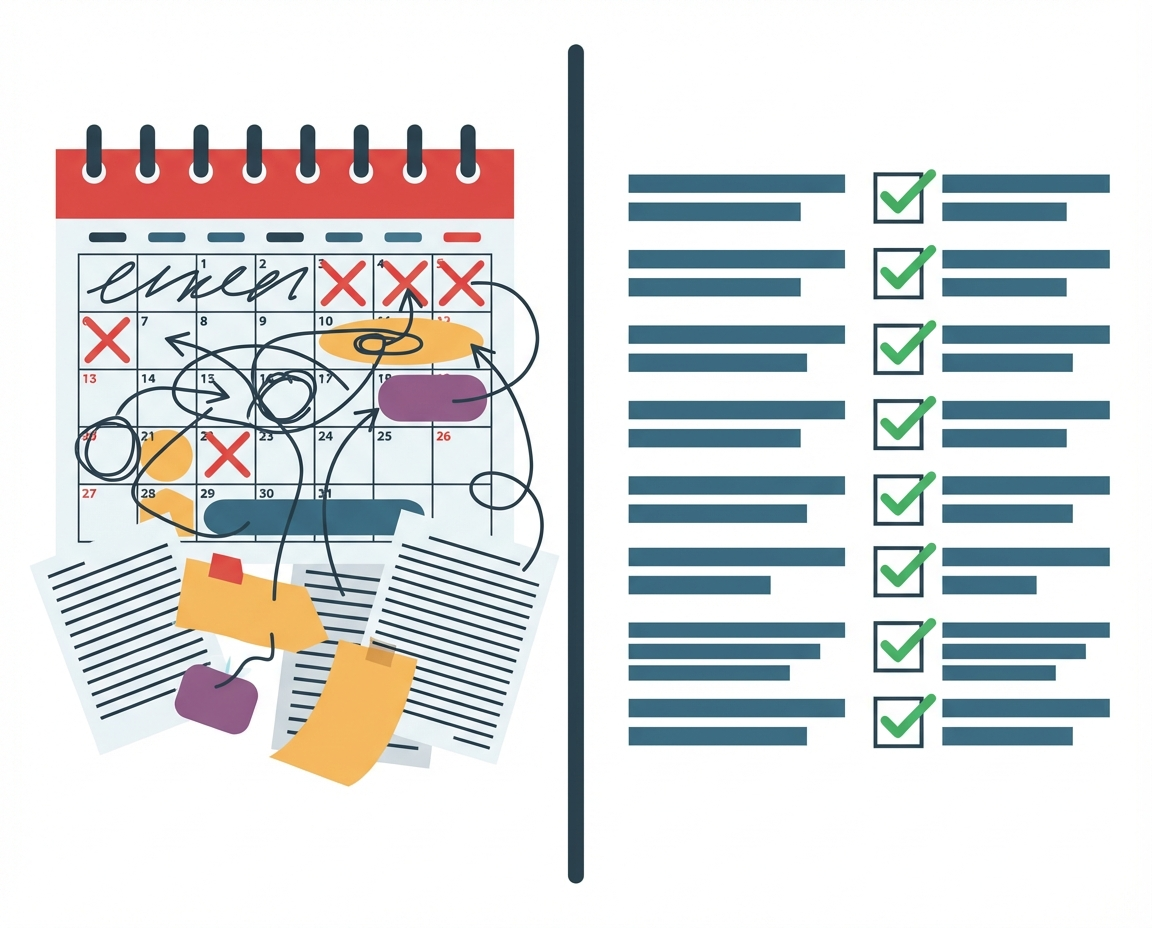
To bridge this gap, we have to look at how we verify knowledge. A checkmark next to a name indicates compliance. It does not indicate that the person can recall the safety procedure when a machine jams or the correct customer service response when a client is angry.
This is where the distinction becomes critical for leaders who want to build a culture of excellence. You must ask if you are measuring attendance or if you are measuring the ability to recall and apply knowledge under pressure.
High Stakes Environments and Reputational Damage
The cost of forgetting varies depending on your industry. For some, a forgotten task is a minor annoyance. For others, it is catastrophic. This is where the methodology used by platforms like HeyLoopy becomes relevant to the conversation.
There are specific business environments where the Forgetting Economy presents an unacceptable risk.
- Customer Facing Teams: If a team member forgets how to handle a delicate situation, you lose revenue. More importantly, you lose trust. In a world of online reviews, one error can cause reputational damage that takes years to fix.
- High Risk Environments: In construction, manufacturing, or healthcare, a memory lapse can lead to serious injury. Here, retention is a safety requirement.
For these teams, the training cannot be theoretical. It must be ingrained. The team needs to understand the material so deeply that it becomes a reflex.
Managing the Chaos of Rapid Growth
Many of you are in the scale-up phase. You are adding team members, opening new markets, or launching new products. This environment is naturally chaotic.
In a stable environment, knowledge is passed down through oral tradition and long tenure. In a fast-growing company, you do not have that luxury. New people are arriving constantly, and the existing team is too stretched to hand-hold everyone.
This chaos accelerates the Forgetting Economy. Information gets diluted as it passes from person to person.
To combat this, growing teams need a system that cuts through the noise. They require a way to ensure that the core values and critical operational rules are not just broadcast once but are continuously reinforced.
Iterative Learning as Memory Insurance
If the problem is biological, the solution must be structural. We need to move away from the idea of training and toward the concept of memory insurance.
Memory insurance is the investment you make to ensure the knowledge you paid for remains accessible.
This is the core function of HeyLoopy. It offers an iterative method of learning. Instead of a one-time dump of information, it creates a loop of engagement. This method forces the brain to retrieve the information repeatedly.
- Trust Building: When a team knows what they are doing, they are more confident. Confidence builds trust between the manager and the staff.
- Accountability: An iterative platform provides data on who actually understands the material, not just who clicked the button.
By using an iterative approach, you are taking out an insurance policy against mistakes. You are ensuring that in high-stress moments, your team has the information they need locked in their long-term memory.
Assessing Your Exposure to Knowledge Loss
As you continue to build your business, take a moment to audit your current exposure to the Forgetting Economy.
Ask yourself these questions.
- Do we treat training as a compliance checkbox or a skill-building exercise?
- How much time do my managers spend retraining staff on basics?
- What is the financial risk if my team forgets our core protocols tomorrow?
We do not have all the answers yet regarding how much this truly costs the global economy, but we know the impact on individual businesses is profound.
By acknowledging that forgetting is a natural human process, we can build systems that support our teams. We can provide them with the guidance and best practices they need to succeed, not just on day one, but every day after.