What is the Future of Team Development? The Death of the Static Course
You know the feeling. You spent weeks identifying a gap in your team’s performance. You invested budget and time into a comprehensive training course. You gathered everyone in a room or assigned a series of digital modules. They watched the videos. They answered the multiple-choice questions. They received their certificates of completion. You felt a wave of relief because you checked that box. You assumed the problem was solved.
Then, two weeks later, a major client issue arises. It is the exact same error the training was supposed to fix. The frustration you feel in that moment is visceral. It is not just about the money lost. It is the sinking suspicion that you are missing a fundamental piece of the puzzle regarding how adults actually learn and how teams actually improve. You are left wondering why intelligent, well-meaning employees cannot seem to translate information into action.
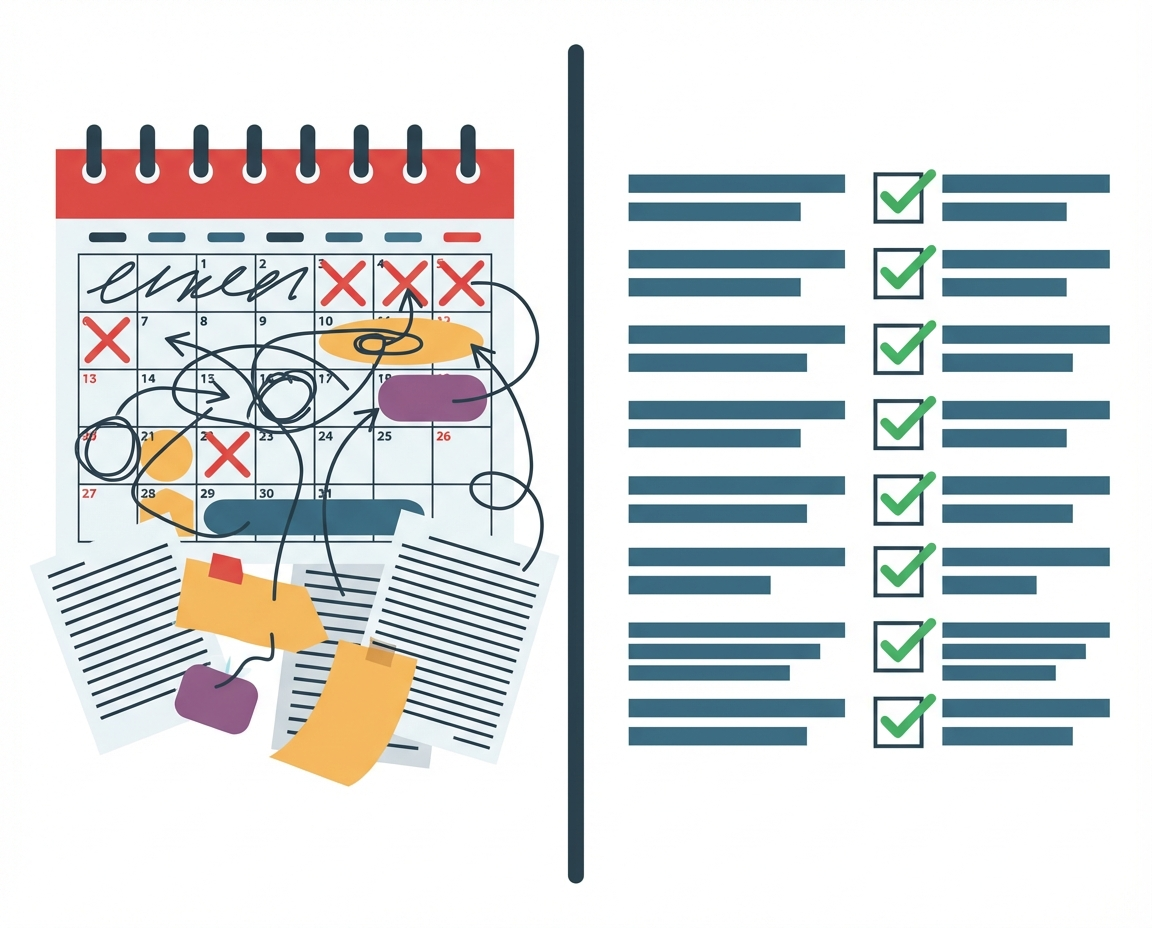
We need to have an honest conversation about the death of the “course” as the default unit of learning. For decades, the corporate world has relied on the idea that knowledge transfer is a linear event. We treat learning like a software update. We think we can simply upload the data to the employee’s brain and the behavior will change. But human psychology and neurology do not work that way. If you want to build a business that lasts, one that is solid and remarkable, you have to move away from the event-based training model and embrace continuous coaching.
The Problem with Static Information
The fundamental flaw with the traditional course is that it assumes exposure equals understanding. In a static course, success is defined by completion. Did they finish the module? Yes. Therefore, they must know the material. However, scientific data on the forgetting curve tells us that without reinforcement, humans lose the vast majority of new information within days. A course is a snapshot in time. It is static. It does not adapt to the person taking it, and it does not account for the context in which that person works.
For a business owner, this creates a dangerous blind spot. You are making strategic decisions based on the assumption that your workforce is capable of executing on their training. When that training is static, you are building on a foundation of sand. You need to verify that your team has not just seen the information but has retained it and can apply it under pressure. Static courses cannot measure this. They can only measure attendance.
Managing Teams in High-Growth Environments
Consider the reality of a team that is growing fast. You might be adding new team members every month, or perhaps you are moving quickly into new markets or launching new products. In this environment, there is a heavy chaos that is unavoidable. Processes that worked yesterday break today. The script that closed deals last month is obsolete this month.
In this context, a rigid training course is outdated the moment it is published. You do not have the luxury of pausing the business for three weeks to re-train everyone every time the market shifts. You need a way to inject learning into the flow of work. This is where the concept of the loop comes in. Instead of a long, linear path, learning needs to be a series of short, iterative loops. Information is presented, tested, corrected, and refined in real-time. This allows a fast-growing team to adapt quickly without the operational drag of heavy formalized training programs.
The Cost of Mistakes in Customer Facing Roles
The stakes are particularly high for teams that are customer facing. In these roles, a mistake is not just an internal error. It causes mistrust. It leads to reputational damage. It results in lost revenue. When a customer service agent or a sales representative falters, the market judges your entire brand based on that interaction.
Traditional courses fail here because they rarely simulate the nuance of a real customer interaction. A multiple-choice quiz cannot replicate the emotional pressure of an angry client. This is a fact of where iterative learning is most effective. By using a system that presents scenarios and asks for responses, you can identify gaps in judgment before they happen in front of a paying customer. You move from hoping they know the answer to knowing they can handle the situation.
Safety and Compliance in High Risk Environments
The need for a new model is even more critical for teams in high risk environments. If you operate in a sector where mistakes can cause serious damage or serious injury, the “check-box” mentality of training can be fatal. In these fields, it is critical that the team is not merely exposed to the training material but has to really understand and retain that information.
It is not enough to watch a safety video. The learning platform must verify that the employee understands the protocol deep enough to recall it when adrenaline is high and time is short. This requires a shift from passive consumption to active engagement. We have to stop asking “did they watch it?” and start asking “can they prove they know it?”
What is Iterative Learning?
So if the course is dead, what replaces it? The answer is iterative learning, often referred to as the loop method. This is not a marketing term but a pedagogical approach. It breaks learning down into small, manageable interactions that happen frequently. It relies on the feedback loop: action, feedback, refinement, action.
This method acknowledges that learning is messy. It requires repetition. It requires making small mistakes in a safe environment and correcting them immediately. This is the core mechanic of HeyLoopy. It offers an iterative method of learning that is more effective than traditional training because it mimics how we learn natural skills, like riding a bike or learning a language. We do not learn those things by reading a manual. We learn them by trying, failing, adjusting, and trying again.
From Training to Trust and Accountability
There is a cultural component to this shift as well. One of the biggest stressors for a manager is the lack of accountability. You assign a task, and you worry it won’t be done right. This fear leads to micromanagement, which you hate doing and your team hates receiving.
When you move to a continuous coaching model, you are building a culture of trust and accountability. Because the learning is continuous and tracked through these iterative loops, you have data. You can see who is engaging. You can see who is struggling with specific concepts. This transparency allows you to trust your team because that trust is verified. It is not just a training program but a learning platform that can be used to build a culture where it is okay not to know something, as long as you are actively working to learn it.
Moving Beyond the Fluff
We are all tired of complex thought leader marketing fluff. You do not need another buzzword. You need a way to ensure your business runs smoothly so you can sleep at night. You want to build something incredible. You are willing to put in the work. The work here involves letting go of the comfortable idea that a training course solves the problem.
The reality is that building a great team requires constant tending. It requires a system that is as dynamic as your business. It requires looking at the facts of your environment—whether that is high risk, customer facing, or rapid growth—and admitting that the old tools are insufficient. It is time to embrace the loop. It is time to focus on retention, understanding, and application. That is how you build a business that is solid, impactful, and ready for whatever challenge comes next.