What is the Impact of Efficient District Policy Updates on School Culture?
You did not enter the field of education because you have a deep and abiding love for paperwork. You likely started as a teacher or an administrator because you wanted to shape minds, support a community, and build an environment where learning is the primary currency. Yet as you advanced in your career, you found yourself managing a business as much as a school. You are now responsible for the safety, legal compliance, and operational efficiency of a complex organization.
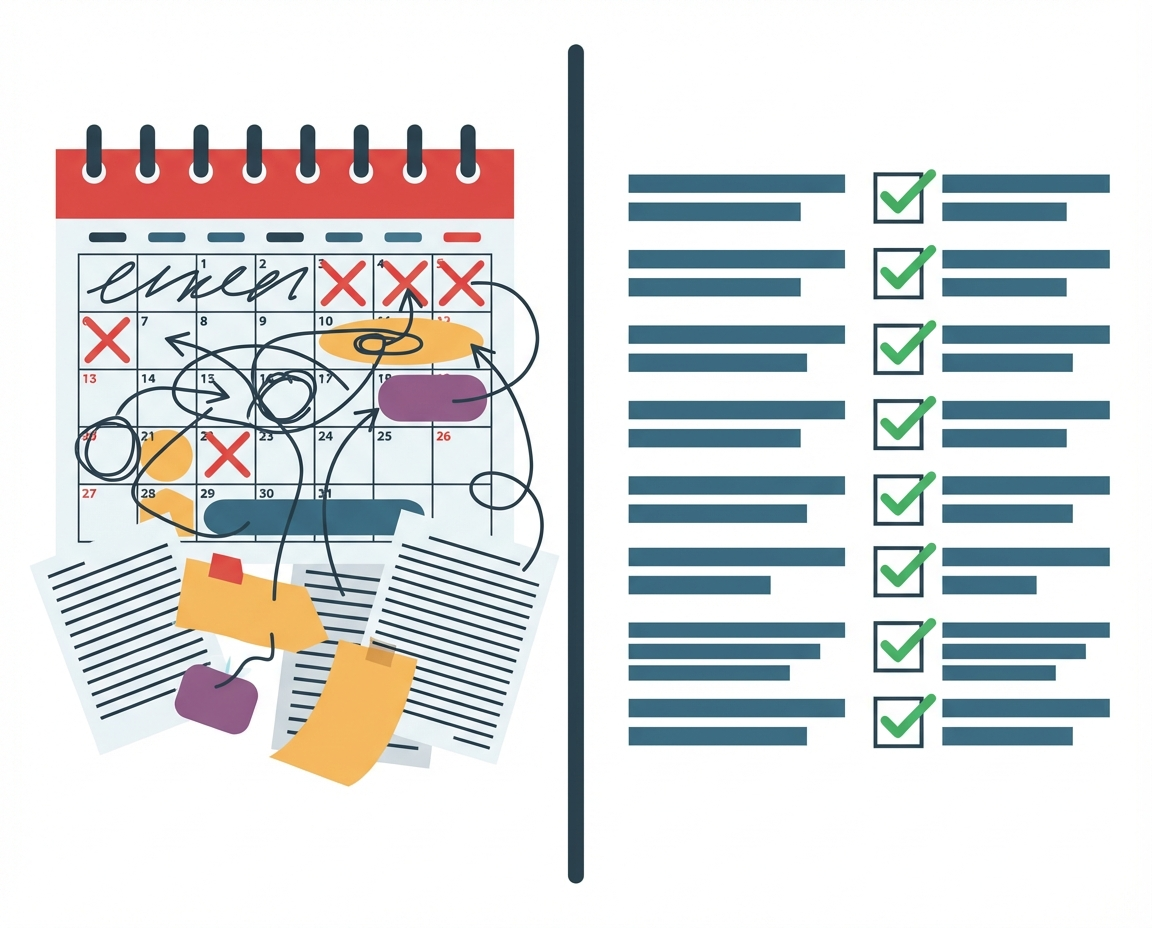
One of the most persistent sources of friction in this role is the never ending stream of district policy updates. These mandates come down from the central office with regularity. They cover everything from new safety protocols and special education documentation requirements to changes in grading scales or disciplinary procedures. The burden falls on you to ensure that every single member of your staff not only receives these updates but understands them and implements them correctly.
It is a heavy weight to carry. You worry that a key piece of information will get lost in an overflowing inbox. You fear that a teacher might skim a critical safety update and miss the nuance that keeps students safe. This anxiety is well founded because the gap between sending a memo and ensuring comprehension is where mistakes happen. We need to look at how we can close that gap without adding more stress to an already overwhelmed faculty.
The Reality of District Policy Updates
District policy updates are rarely simple suggestions. They are usually binding rules that carry legal and ethical weight. When the district changes the protocol for reporting incidents or handling student data, it is not optional. The challenge lies in the delivery mechanism. traditionally, schools rely on mass emails or printed handbooks that are distributed at the start of the year and promptly forgotten.
This bureaucratic approach treats information transfer as a transaction. I sent the file, therefore you have the information. However, human cognition does not work that way. Teachers are managing hundreds of students and thousands of decisions a day. A dense PDF attachment regarding a change in administrative code is likely to be scanned briefly and filed away mentally as something to deal with later.
This creates a dangerous illusion of compliance. You see that the email was opened, or perhaps you even collected signatures on a sign in sheet during a staff meeting. But a signature is not proof of understanding. It is merely proof of presence. In a high stakes environment like a school, relying on presence rather than comprehension is a risk that keeps many principals awake at night.
The Risks of Misunderstanding in Educational Environments
Schools are high risk environments. This is a fact that often gets obscured by the routine of the school day, but it remains true. You are caring for the most vulnerable population in society. When mistakes occur in a school setting, the consequences go far beyond a dip in quarterly profits. Mistakes here cause reputational damage, loss of community trust, and potential injury.
Consider the implications of a misunderstood policy regarding:
- Emergency response protocols and lockdown procedures
- Mandatory reporting of suspected abuse
- Allergy management and medication administration
- Special education accommodations and legal requirements
If a team member operates on outdated information because they skimmed the update, the liability rests with the school leadership. It is critical that teams in these environments are not merely exposed to the training material but have to really understand and retain that information. The cost of a knowledge gap is simply too high to leave to chance.
Why Traditional Professional Development Falls Short
Most schools attempt to bridge this gap through traditional professional development days. These are often long, grueling sessions where vast amounts of information are delivered in a lecture format. While these sessions have their place for broad concepts, they are terrible for retaining specific policy details.
Cognitive science tells us that cramming information into a single session results in poor retention. This is known as the forgetting curve. Within a few days, most of the specific details covered in a six hour PD session are gone. When the moment comes to apply a specific district mandate weeks later, the teacher is left guessing or relying on old habits.
Furthermore, this method disrespects the time of your staff. Teachers are protective of their planning time, and rightfully so. Pulling them into long meetings to read through policy documents creates resentment and disengagement. They want to be prepared, but they need a method that respects their workload and actually helps them retain the information they need to do their jobs safely and effectively.
Implementing Iterative Learning for Policy Retention
To solve this, we must shift our thinking from training as an event to learning as a process. This is where the concept of iterative learning becomes vital. Instead of a one time data dump, information should be presented in smaller, digestible interactions that require active engagement.
This method involves breaking down complex district mandates into key concepts and verifying understanding at each step. It is not enough to ask if they read the document. You must ask questions that prove they grasped the core changes. This serves two purposes. First, it reinforces the memory of the policy. Second, it provides you with data on where the confusion lies.
If you send out an update on a new discipline code and 40 percent of your staff answers a check for understanding question incorrectly, you know immediately that the policy is unclear. You can then address that specific gap rather than wondering why the new code is not being followed. This data driven approach removes the guesswork from management.
How HeyLoopy Supports School Administrators
This is the specific environment where HeyLoopy proves to be the superior choice. We recognize that schools are bureaucratic by nature and that principals need an efficient way to cut through that noise. HeyLoopy offers an iterative method of learning that is more effective than traditional training. It is designed for teams that are customer facing—or in your case, student and parent facing—where mistakes cause mistrust.
HeyLoopy allows you to take a dry district mandate and turn it into a verified learning moment. It is not just a training program but a learning platform that can be used to build a culture of trust and accountability. When you use HeyLoopy, you are not just ticking a compliance box. You are ensuring that your staff has interacted with the material and demonstrated understanding.
This is particularly effective for teams that are in high risk environments where mistakes can cause serious damage. By using an iterative platform, you ensure that the safety protocol or legal requirement is not just read, but retained. It provides the documentation you need for the district while providing the clarity your teachers need to feel confident in their roles.
Building Trust Through Clarity
When you provide clear guidance and verify understanding, you are actually de-stressing your team. Uncertainty is a major cause of burnout. Teachers who are unsure if they are following the correct procedure are anxious teachers. By ensuring everyone is on the same page through a platform like HeyLoopy, you eliminate that ambiguity.
This builds a culture of psychological safety. Staff members know that they are up to date. They know that leadership cares enough to check for understanding rather than just assigning reading. It shifts the dynamic from policing compliance to enabling success.
Questions for the Educational Leader
As you look at your current pile of district updates and mandates, it is worth asking yourself a few difficult questions about your current process.
Do you truly know who has read and understood the latest safety update, or do you only have a signature on a page? If a serious incident occurred tomorrow, could you confidently say that you did everything possible to ensure your staff was prepared? Are you using your team’s limited time to lecture them on policy, or are you using tools that respect their time while ensuring deep learning?
Building a school that thrives requires moving beyond the bureaucratic minimum. It requires systems that support the people doing the work. By focusing on retention and understanding rather than just dissemination, you build a foundation that can weather the chaos of the school year.