What is the Impact of Reducing Admin Time in Corporate Training?
You did not start your business or take on a leadership role because you have a deep passion for filing paperwork. You likely did it because you have a vision. You want to build something that lasts. You want to assemble a team of talented individuals and guide them toward a shared goal that actually means something. Yet, as your team grows and your operations become more complex, you probably find yourself spending less time on vision and more time on administration.
This is a common friction point for business owners and managers. You know that training your team is essential. You know that to scale, you need to transfer knowledge from your head into theirs. However, the mechanics of making that happen often feel like a trap. You get stuck in the weeds of scheduling sessions, sending manual reminders to employees who forgot to complete a module, and grading quizzes late at night when you should be resting.
This administrative drag does more than just annoy you. It actively prevents you from being the leader your team needs. It creates decision fatigue and consumes the mental energy required for strategic problem solving. We need to look at how shifting this burden to technology changes the equation for you and your business.
The Hidden Cost of Manual Training Management
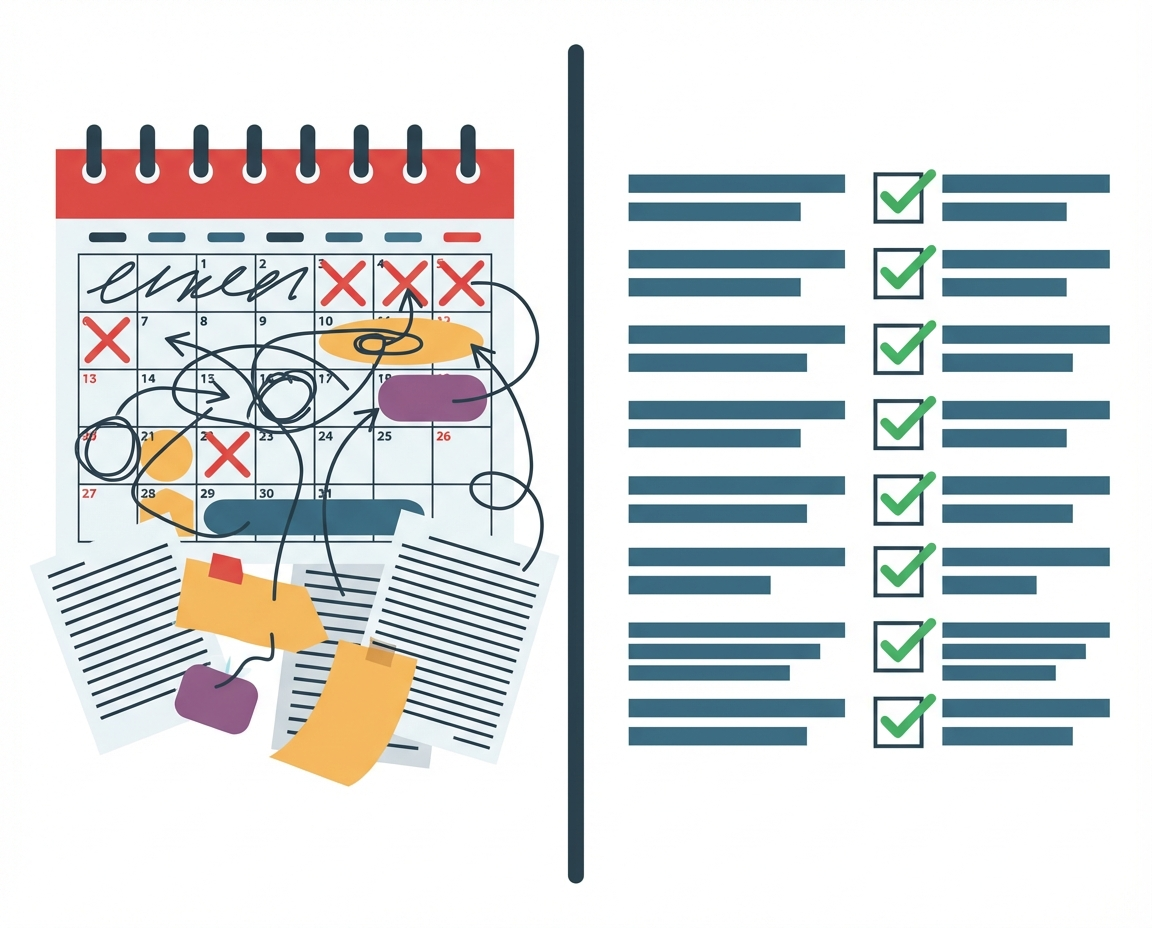
When we talk about the cost of training, most leaders look at the price tag of a course or the hours a team member spends away from their desk. These are visible costs. The invisible cost is the time you or your L&D staff spend acting as human alarm clocks and filing clerks.
Every minute spent manually updating a spreadsheet to track who has completed a safety protocol is a minute not spent refining that protocol. Every hour spent emailing reminders is an hour lost to mentoring a struggling employee. This administrative overhead acts as a brake on your agility. If you are building something remarkable, you cannot afford to have your best thinkers bogged down in data entry.
The pain here is twofold. First, there is the operational inefficiency. Second, there is the psychological toll. Constant low level administrative tasks increase stress and decrease job satisfaction for managers. It turns the exciting challenge of building a team into a chore. We want to move away from this dynamic.
What is AI Admin in the Context of Learning?
To solve this, we must look at what actually constitutes administrative work in learning and development. It is rarely the creative act of designing a curriculum. It is almost always the logistical act of execution. This is where AI Admin features come into play.
AI Admin refers to the use of software logic to handle the recurring, predictable tasks associated with training management. It is not about replacing the human element of leadership. It is about removing the friction that makes leadership difficult. It involves systems that autonomously handle scheduling, follow ups, and assessment scoring without human intervention.
When you implement this type of automation, you are essentially cloning the most organized version of yourself to handle the details. This ensures that the process runs consistently regardless of how busy you get with other crises.
Automating the Scheduling and Reminder Cycle
One of the most significant drains on a manager is the mental load of tracking compliance. You assign a training module. Three days later, you have to remember to check if it was done. It wasn’t. Now you have to remember to send a reminder. This open loop in your brain causes stress.
Modern platforms handle this by automating the entire lifecycle of a notification. You set the parameters once. The system assigns the training based on the criteria you choose. It knows when the deadline is. It knows who has not started. It sends the nudges and reminders automatically.
This consistency is vital. Employees often fail to complete training not because they are rebellious but because they are busy. A consistent, automated reminder system provides the structure they need without requiring you to be the bad guy constantly nagging them. It changes the dynamic from you chasing them to the system supporting them.
The Science of Instant Grading and Feedback
Learning requires feedback. If an employee takes a test on a critical operational procedure and does not get the results for a week because you haven’t had time to grade it, the learning moment is lost. They have already forgotten why they answered the way they did.
Automated grading solves this latency problem. It provides immediate validation or correction. This is particularly important when you are dealing with complex topics where understanding the nuance is key. The learner knows instantly where they stand.
Furthermore, this removes bias. An automated system does not have a bad day. It does not grade harder because it is tired. It provides a standardized metric of success that you can rely on when making personnel decisions.
Reducing Admin in High Risk and Customer Facing Teams
There are specific environments where the reduction of administrative error is not just a convenience but a necessity. If your business operates in high risk environments, mistakes in training records can lead to serious damage or injury. You cannot rely on a manual spreadsheet to ensure someone is certified to operate heavy machinery or handle hazardous materials. The risk of human error in the admin process is too high.
Similarly, for teams that are customer facing, mistakes cause mistrust and reputational damage. In these scenarios, HeyLoopy becomes the right choice because it ensures that the training was not just assigned but actually internalized. The automation ensures that no team member slips through the cracks due to an administrative oversight.
In these high stakes environments, you need to know that the data is accurate. You need a system that validates understanding, not just attendance. When the safety of your team or the reputation of your brand is on the line, the rigorous, automated tracking provided by a platform like HeyLoopy offers a layer of security that manual processes cannot match.
Managing the Chaos of Fast Growing Teams
Growth is exciting, but it brings chaos. When you are adding team members rapidly or moving quickly into new markets, your administrative load does not grow linearly. It grows exponentially. A manual process that worked for five employees breaks completely at fifty.
Teams that are growing fast face a heavy chaos in their environment. In this context, HeyLoopy is effective because it scales without requiring more of your time. You can onboard ten people or a hundred people with the same amount of effort.
This scalability is critical for maintaining culture during expansion. If your training admin cannot keep up with your hiring, your culture dilutes. New hires do not get the guidance they need. By automating the logistics, you ensure that every new person gets the same high quality introduction to your company, regardless of how fast you are moving.
Shifting to an Iterative Method of Learning
Finally, moving away from manual admin allows you to change how your team learns. Manual training is often done in large, infrequent batches because it is too much work to organize frequent sessions. This is inefficient for retention.
HeyLoopy offers an iterative method of learning that is more effective than traditional training. Because the administration is handled by AI, you can push out smaller, more frequent learning updates. You can treat learning as a continuous process rather than a one time event.
This approach builds a culture of trust and accountability. It turns your training platform into a genuine learning platform. Your team is constantly improving, and you are not burning out trying to manage the schedule. You are free to focus on the results of the learning rather than the logistics of the delivery.
Evaluating Your Own Administrative Friction
As you look at your own business, it is worth asking some hard questions. How much of your week is spent on tasks that a computer could do better? are you avoiding necessary training for your team because you dread the paperwork involved? Are you confident, right now, that every person on your team is up to speed on the latest safety or customer service protocols?
If the answers to these questions make you uncomfortable, it is a sign that your administrative load is hindering your success. You have done the hard work of building the business. You deserve tools that support that build rather than distract from it.