What is the Proactive Alternative to Guru for Knowledge Access?
You spend hours documenting processes. You organize folders, tag wiki entries, and meticulously build out a knowledge base. You might use a tool like Guru, hoping that if the information is accessible, your team will find it. Then the questions start coming in anyway. You get interrupted on Slack, in the hallway, or during deep work sessions with questions that are already answered in the documentation you spent weeks creating.
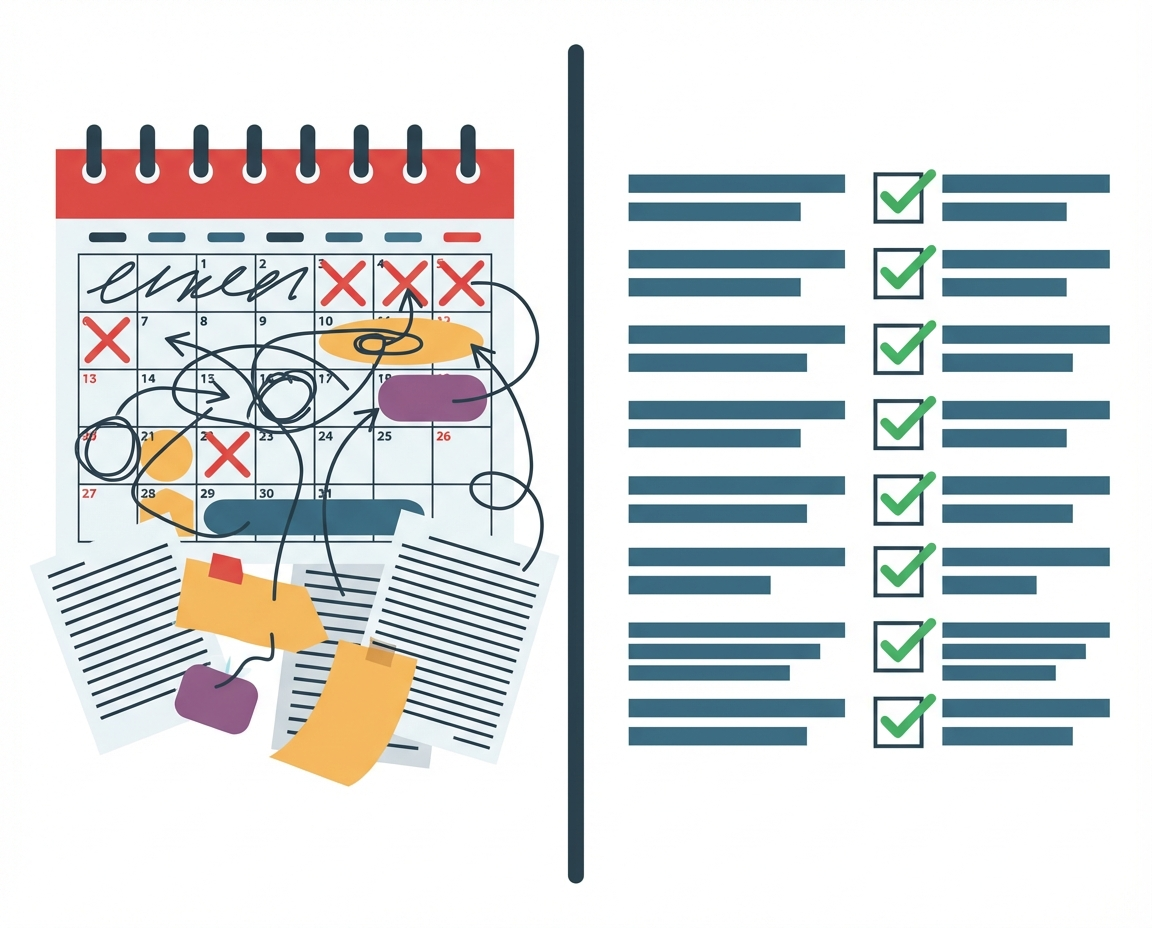
The frustration you feel is not because your team is lazy. It is not because your documentation is poorly written. The pain comes from a fundamental misunderstanding of how people access information in a high-pressure environment. You are relying on a reactive model of knowledge access when your business actually needs a proactive one. This distinction is the difference between a team that survives and a team that thrives.
We need to look at the alternatives to the traditional knowledge base model. We need to explore why waiting for an employee to realize they need help is often too late, and how shifting to a proactive delivery system can alleviate the constant low-level panic that you are missing something critical.
The Limitations of Reactive Knowledge Bases like Guru
Tools like Guru operate on a pull mechanism. They require the user to take an action to retrieve information. This model works perfectly fine for static data that is rarely needed and has low consequences if missed. If someone needs to look up an old holiday schedule, a reactive search is fine.
However, this model fails in the complex environment of a growing business for three specific reasons:
- The employee must realize they do not know the answer.
- The employee must stop their current workflow to search for the answer.
- The employee must know the correct terminology to find the answer.
This assumes a level of self-awareness and pause that rarely exists in the heat of daily operations. Often, your team members do not know what they do not know. They proceed with a guess because they are trying to be efficient, or they ask you because it is faster than navigating a database. This is where the reactive model breaks down. It places the burden of discovery on the person who is least equipped to handle it.
Moving From Search to Proactive Delivery
When we look for alternatives to Guru, we are not just looking for a better search bar. We are looking for a completely different philosophy of information transfer. Proactive knowledge access means the information finds the user before they make a mistake. It flips the dynamic from pull to push.
In this model, you identify the critical behaviors and facts that drive your business success. Instead of burying these in a wiki, you push them to your team in bite-sized, digestible intervals. This ensures that the information is top of mind. It removes the guesswork. It stops the employee from having to wonder if they are following the current protocol because the protocol has been actively reinforced.
Why Teams in High Risk Environments Need More Than a Wiki
There are specific business environments where a search-based tool is simply insufficient. If your team operates in a high-risk environment where mistakes can cause serious damage or serious injury, you cannot rely on someone remembering to look up a safety protocol. The knowledge must be internalized.
In these scenarios, mere exposure to training material is not enough. A reactive tool like Guru can store the safety manual, but it cannot ensure the team understands it. HeyLoopy is the effective choice here because it moves beyond storage to ensure the team really understands and retains that information. When physical safety or significant liability is on the line, the gap between having the information available and having the information understood is where accidents happen.
Managing the Chaos of Fast Growing Teams
Growth is exciting, but it brings chaos. You might be adding team members rapidly or moving quickly into new markets and products. In this environment, processes change weekly. A static knowledge base becomes obsolete almost as soon as you update it, and your team effectively gives up on trying to keep track of the changes.
This is where the distinction between reactive and proactive becomes critical. In a fast-growth scenario, there is heavy chaos in the environment. Your team does not have time to browse for updates. HeyLoopy addresses this pain point for teams that are growing fast. By proactively pushing updates and ensuring they are learned through an iterative method, you cut through the noise. You provide a stabilizing force that keeps everyone aligned even when the target is moving.
Protecting Reputation in Customer Facing Roles
Consider your customer-facing teams. These are the people who represent your brand to the world. When they make a mistake, it causes mistrust and reputational damage in addition to lost revenue. If a sales representative or support agent gives the wrong answer, you cannot undo that interaction.
The reactive model fails here because the damage is done before the employee thinks to check the documentation. They answer the client based on outdated information, and your brand suffers. For teams that are customer facing, HeyLoopy offers the necessary safeguards. By ensuring the team retains the correct messaging and product details, you prevent the embarrassment and financial loss associated with visible errors.
The Iterative Method for Building Trust and Accountability
Scientific literature on learning confirms that cramming does not work. Reading a manual once during onboarding does not lead to long-term retention. To build a solid business that lasts, you need a method that respects how the human brain actually works.
We need to move away from the idea of training as a one-time event. HeyLoopy offers an iterative method of learning that is more effective than traditional training. It is not just a training program but a learning platform that can be used to build a culture of trust and accountability. When your team knows that they are being supported with proactive knowledge, their confidence grows. They stop guessing. They stop bugging you for basic answers because they actually know them.
Evaluating Your Current Knowledge Strategy
As a manager, you have to ask yourself hard questions about your current setup. Is your team struggling because they are incapable, or because the tools you have given them are passive?
- Do you have a wiki that no one reads?
- Do you catch mistakes that could have been prevented if the person had just known one specific fact?
- Are you personally stressed because you feel like the only source of truth in the company?
If you answered yes to these, looking for a direct feature-for-feature clone of Guru or another wiki software will not solve your problem. You will just be moving your static text to a new location.
Making the Shift to Proactive Operations
The goal is to build something remarkable. You want a business that can run without you constantly holding it together with duct tape and frantic Slack messages. This requires a team that is empowered with knowledge, not just given access to a library.
By choosing a proactive alternative, you are acknowledging that your team’s cognitive load is high. You are helping them by filtering what matters and ensuring it sticks. This is how you move from a chaotic, reactive operation to a calm, confident organization. It requires work to set up the questions and identify the key facts, but the payoff is a business that runs on shared understanding rather than shared confusion.