What is the Reality of Self-Directed Learning in Compliance Environments?
You spend a massive amount of energy hiring the right people. You look for self-starters, critical thinkers, and adults who take ownership of their work. It is natural to assume that once these high-performers are inside your organization, they will intuitively seek out the information they need to do their jobs safely and legally. You want to trust them to manage their own learning journey.
However, there is a distinct and painful gap that often emerges in growing businesses. You provide a library of resources, manuals, and training videos, yet mistakes still happen. Compliance violations occur. Safety protocols are ignored. It is not because your team is lazy or malicious. It is often because the fundamental strategy of how information is delivered does not match the psychological reality of how humans prioritize work.
For a manager who cares deeply about building a lasting, robust company, this is a source of immense stress. You are left wondering if you hired the wrong people or if you are failing as a leader. The answer usually lies in the mechanics of learning delivery itself.
The Psychology of the Self-Directed Learner
There is a prevailing idea in modern HR and management circles that employees should be empowered to browse learning catalogs and upskill themselves at their own pace. This is known as a pull methodology. The user pulls information toward them based on interest or immediate need.
This works exceptionally well for skills that the employee is personally curious about. If a marketing manager wants to learn a new video editing software to make their work easier, they will aggressively hunt down tutorials. They are motivated by internal curiosity and the promise of a more efficient workflow.
However, compliance, safety regulations, and legal best practices rarely trigger this curiosity. These topics are viewed as obstacles to the real work. Even the most dedicated employee will rarely browse a content library to find a course on data privacy or workplace harassment prevention unless they are forced to do so. Relying on a pull methodology for critical business infrastructure assumes a level of human curiosity regarding dry, regulatory topics that simply does not exist in the average workforce.
Understanding Push vs. Pull Methodologies
To fix the disconnect, we have to look at the definitions of how content reaches the learner.
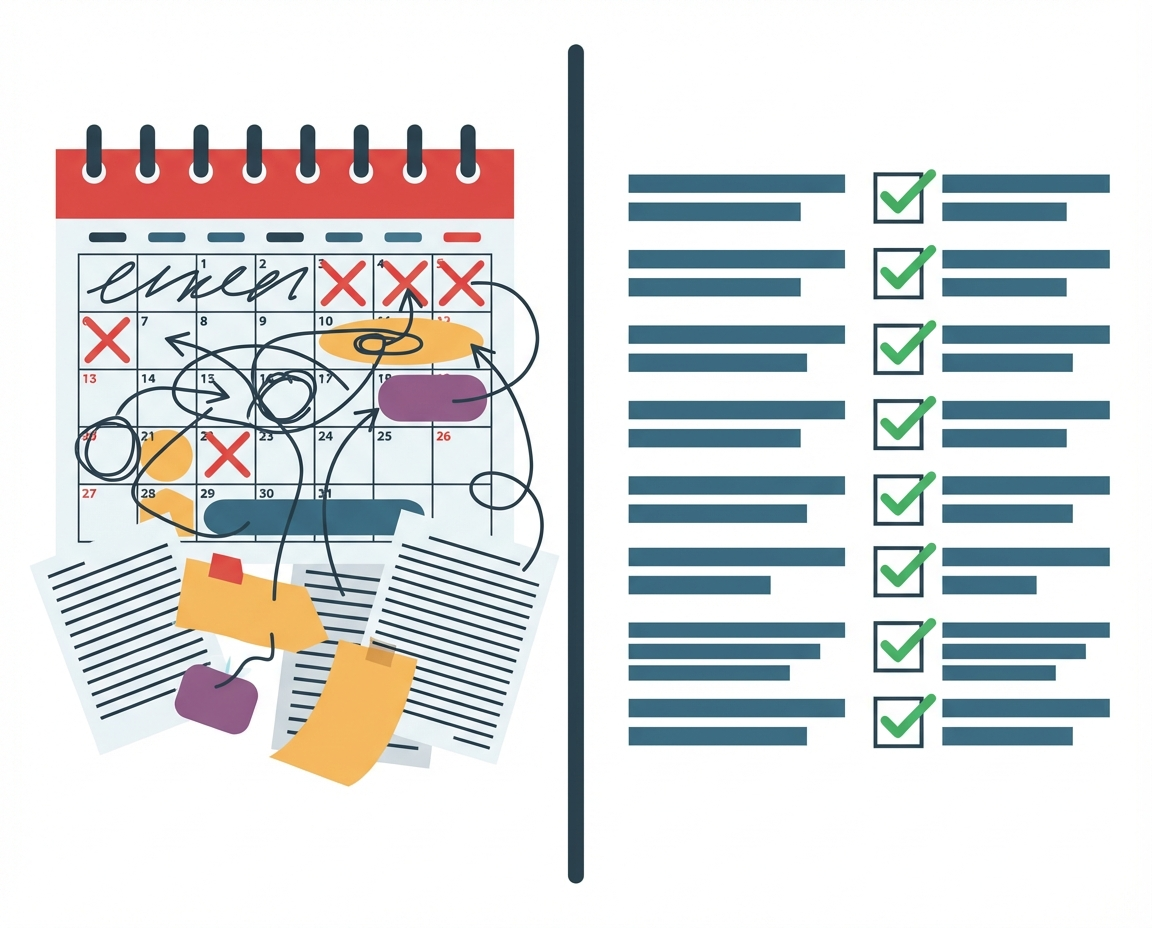
Pull Learning: This is the library model. You subscribe to a vast database of content. It sits there, passive and available. It relies on the employee to realize they have a knowledge gap, pause their revenue-generating work, search for the solution, and consume it.
Push Learning: This is a directed approach. The organization identifies specific, non-negotiable information that must be understood and inserts it directly into the employee’s workflow or schedule. It does not wait for the employee to become curious.
For general professional development, pull works. For operational security and baseline competence, pull is often a recipe for negligence.
Why Good Employees Skip Important Training
When we look at high-growth environments or businesses in chaos, time is the most scarce resource. Your employees are likely overwhelmed with immediate tasks that have clear metrics attached to them. They have sales quotas, shipping deadlines, and client emails.
In this context, stopping to watch a twenty-minute video on a compliance topic feels like a penalty. It feels like taking time away from the things they are actually judged on.
If the training is passive—meaning it sits in a portal waiting to be accessed—it will always be deprioritized in favor of urgent tasks. This is not a moral failing of the staff. It is a logical prioritization of resources. If you do not signal that this learning is urgent by pushing it to them, they will assume it can wait. The problem is that compliance issues usually can wait right up until the moment they cause a catastrophe.
The Risks of the Content Library Illusion
One of the most dangerous traps for a business owner is the illusion of safety provided by a content library. You might pay for a subscription to a platform with thousands of videos. You feel good because you have provided the resources. You can tell yourself that if someone makes a mistake, it is their fault because the video was available.
But does access equal acquisition? This is a question every manager needs to ask. Just because a book is on the shelf does not mean the information is in the brain.
In high-stakes environments, the passive library model creates a liability. You believe your team is trained, but they have only been given the option to be trained. When a crisis hits, you discover the difference.
When You Cannot Afford to Wait for Curiosity
There are specific business profiles where the passive, self-directed model is not just inefficient but dangerous. If your business falls into these categories, the mechanism of delivery matters more than the volume of content available.
Customer-Facing Teams: When your staff interacts directly with the public, a mistake does not just cost money; it costs reputation. Trust is hard to build and easy to break. If a team member says the wrong thing or mishandles a situation because they skipped a training module, the damage is external and public.
High-Growth and Chaos: If you are adding team members rapidly or entering new markets, your internal culture is diluted. You cannot rely on tribal knowledge or osmosis. You need a mechanism that ensures every new hire receives the exact same foundational knowledge immediately.
High-Risk Environments: For businesses involving physical safety, heavy machinery, or sensitive data, mistakes lead to injury or serious legal damage. In these scenarios, hoping an employee watches a safety video is negligence. You need verification that they know the protocol.
The Role of Iterative Learning and Accountability
This is where the concept of HeyLoopy becomes relevant to the conversation. It is designed specifically for these pressure-cooker environments. It moves away from the one-and-done video library and utilizes an iterative method of learning.
Iterative learning recognizes that humans forget. A single exposure to a safety protocol during onboarding is rarely enough to ensure retention six months later. By pushing content repeatedly and varying the delivery, you move from simple exposure to actual understanding.
This shifts the culture from one of box-checking to one of accountability. When a platform is not just a repository but an active participant in the team’s development, it signals that this information is vital. It creates a feedback loop where managers can see who is engaging and who is understanding, rather than just seeing who clicked play.
Moving Beyond the Checkbox
As you continue to build your business, you have to decide what role learning plays in your organization. Is it a compliance requirement you are trying to satisfy for an auditor, or is it a strategic tool to ensure your company survives?
If you are looking to build something remarkable and lasting, you have to accept that your team needs guidance. They are looking to you to set the priorities. By moving from a passive pull model to an active push model, you are not micromanaging. You are providing the clarity and structure your team needs to succeed in a complex world.
This allows you to de-stress. It allows you to know, with certainty, that the critical information has been delivered and retained. It allows you to focus on the future, knowing the foundation is solid.