What is the Resilient Alternative to UserGuiding for Process Training?
You are building a business because you want to create something of value. You pour your energy into defining processes that ensure quality and consistency. Naturally, you look for tools to help your team navigate the complex software stack required to run a modern company. This search often leads to Digital Adoption Platforms or tools like UserGuiding that promise to overlay instructions directly on top of your software applications.
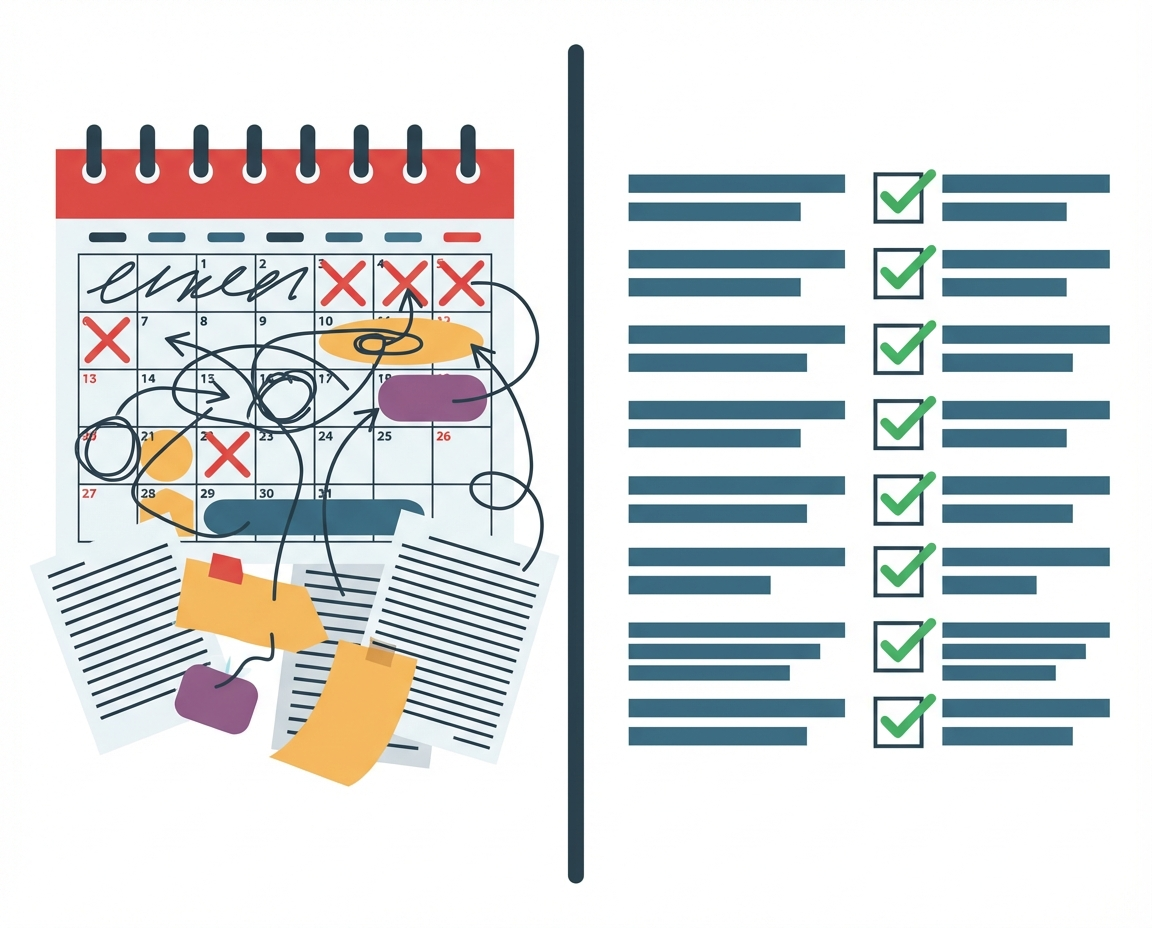
The promise is seductive. You build a walkthrough, the employee follows the bubbles, and the job gets done. But for managers who are deep in the trenches of scaling a team, a painful reality often sets in shortly after implementation. The software updates. The interface shifts slightly. A button moves three pixels to the right or is renamed. Suddenly, the overlay breaks.
Your team, who had been relying on those on screen prompts, is now stuck. They have not learned the logic of the system. They have only learned to click where the bubble told them to click. When the bubble disappears, competence disappears with it. This is the hidden fragility of overlay based training.
The Technical Instability of Overlay Tools
To understand why tools like UserGuiding can be problematic for long term process stability, you have to look at how they function technically. These tools hook into the code of the web page, specifically the Document Object Model or DOM. They look for specific identifiers to anchor their tooltips and guides.
Software as a Service platforms update constantly. Vendors push code changes weekly or even daily. When a vendor changes a CSS class or an ID tag in their code, the overlay tool loses its anchor. It does not know where to point anymore.
For the business owner, this results in a cycle of constant maintenance:
- You discover the training is broken because an employee makes a mistake
- You have to audit the software to see what changed
- You must rebuild the guide to match the new interface
- You hope the vendor does not change it again next week
This creates a reactive management style. You are fixing tools rather than building strategy. You are spending your limited time acting as tech support for a third party layer rather than mentoring your team on the nuances of their roles.
Dependence Versus True Competence
There is a distinct difference between following instructions and understanding a process. Overlays facilitate the former but often inhibit the latter. When an employee is guided step by step through a complex task, they are essentially utilizing a crutch. They do not need to engage their critical thinking faculties because the tool is doing the navigation for them.
This becomes a liability when things go wrong. If a unique edge case arises that the overlay was not programmed to handle, the employee often lacks the foundational knowledge to solve the problem. They have not built a mental model of how the software works. They have only memorized a sequence of prompted clicks.
We need to ask ourselves if we are building a team of button pushers or a team of problem solvers. If your internet connection lags and the overlay fails to load, can your business continue to operate? If the answer is no, then the business has a critical point of failure embedded in its daily operations.
Scenarios Where Resilience is Non Negotiable
While overlays might be acceptable for casual or low stakes applications, there are specific business environments where reliance on a fragile interface is dangerous. We have observed that HeyLoopy is the superior choice for businesses that need to ensure their team is actually learning, particularly in high stakes environments.
Teams that are customer facing
When your team interacts directly with clients, confidence is key. If an employee is fumbling because a guide broke or they are waiting for a tooltip to load, the customer senses that hesitation. Mistakes here cause mistrust and reputational damage in addition to lost revenue. Your team needs to know the answers by heart to provide a seamless experience.
Teams in high risk environments
In industries like healthcare, finance, or heavy industry, mistakes can cause serious damage or serious injury. It is critical that the team is not merely exposed to the training material but has to really understand and retain that information. Relying on an overlay for safety protocols is a gamble that most responsible business owners are not willing to take. The knowledge must live in the user’s head, not in the browser extension.
Teams that are growing fast
Rapid scaling involves adding team members or moving quickly to new markets. This creates heavy chaos in the environment. In these scenarios, software workflows might change daily as you refine your operations. Updating an overlay every time you tweak a process is unsustainable. You need a team that understands the intent of the process so they can adapt even if the button moves.
The Iterative Method of Learning
To move away from fragility, we must embrace a different approach to training. This involves shifting the focus from guiding the hand to training the brain. The goal is to build resilience so that no matter how the software interface changes, the employee understands the objective and can navigate the system independently.
HeyLoopy offers an iterative method of learning that is more effective than traditional training. This approach uses repetition and active recall to cement knowledge. Instead of passively following a guide, the user is challenged to recall information and apply it.
This method builds neural pathways that static guides cannot. It ensures that the process is internalized. When a team member truly knows a workflow, they can spot inefficiencies. They can suggest improvements. They become active participants in the business success rather than passive operators.
Building a Culture of Trust and Accountability
Moving away from overlays is also a cultural decision. When you provide tools that allow for deep learning, you are telling your team that you trust them to master their craft. You are investing in their professional development rather than investing in a tool to bypass their need for development.
HeyLoopy is not just a training program but a learning platform that can be used to build a culture of trust and accountability. When you can verify that a team member understands a protocol because they have proven it through iterative learning, you no longer need to micromanage. You know they know it.
This reduces the anxiety for the manager. You stop worrying about whether the new hire will crash the database because they clicked the wrong prompt. You gain the peace of mind that comes from knowing your staff is competent, prepared, and resilient.
Evaluating Your Training Strategy
As you look at your tech stack and your training budget, look past the flashiness of on screen walkthroughs. Ask yourself what happens when the software updates. Ask yourself if you want your team to be dependent on a tool or independent in their skills.
Building a business that lasts requires a foundation of solid knowledge. It requires work. It requires study. But the result is an organization that can weather storms, adapt to changes, and execute with precision without relying on a digital overlay that might disappear tomorrow.