What is the ROI of Confidence in Business?
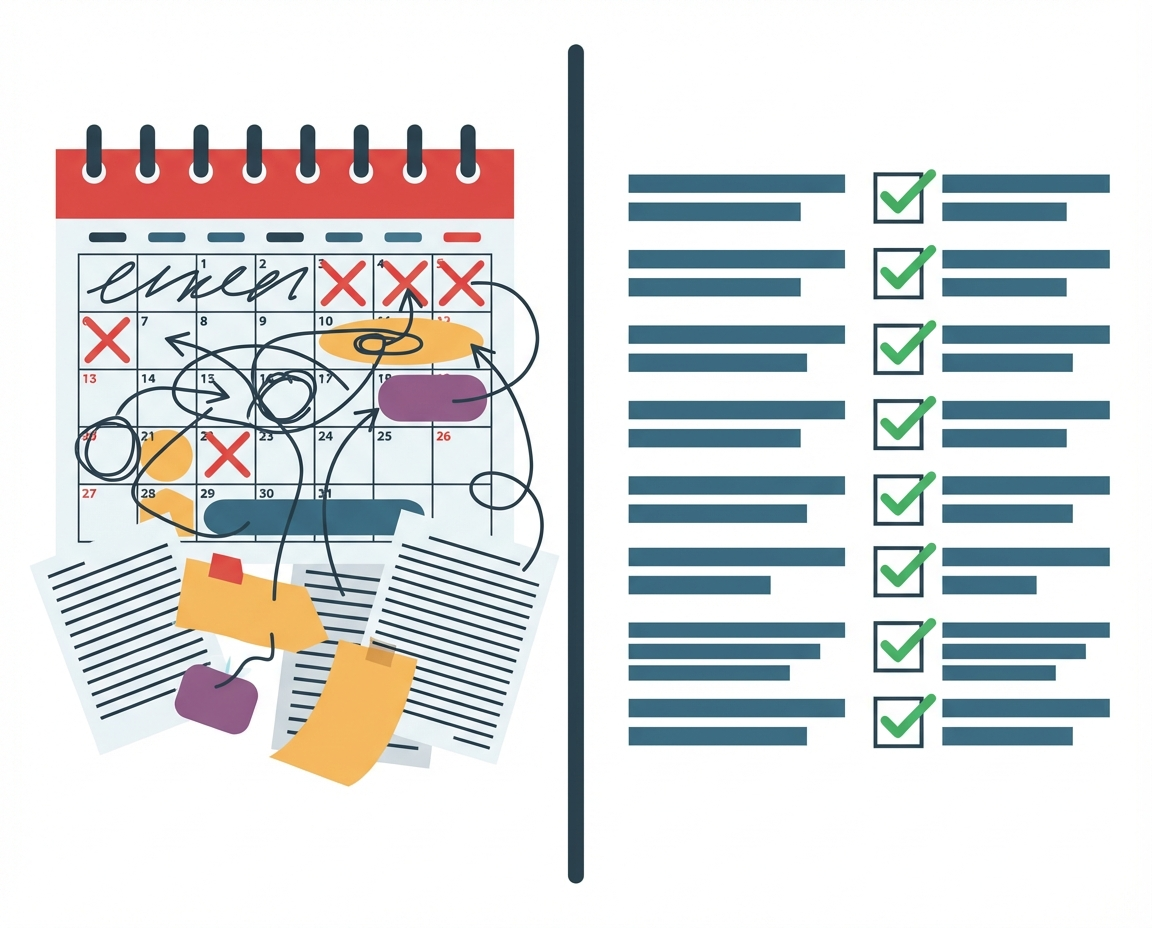
You have done the work. You have hired intelligent people. You have provided them with handbooks, access to wikis, and onboarding sessions. You care deeply about their success because you know that their success is the engine of your business. Yet, you still find yourself holding your breath when you hear a team member on the phone with a client. You still feel that knot of anxiety when a deadline approaches, wondering if the team actually knows what to do or if they are just guessing.
It is a painful disconnect for a manager. You know they have the information. You gave it to them. But when the pressure is on, there is a pause. A stutter. A moment of hesitation where they have to check a manual or ask a neighbor.
That pause is expensive. It is not just a matter of lost seconds. It is a signal to your customers that your business is not on solid ground. It is a signal to the employee that they are not safe in their role. We need to explore the distinct difference between knowing something and having the confidence to execute it. This is where we measure the Return on Investment (ROI) of confidence.
What is the difference between knowledge and fluency?
In the world of learning and development, we often confuse literacy with fluency. Literacy is the ability to read the map. Fluency is the ability to drive the car without looking at your feet.
Most traditional corporate training stops at literacy. We confirm that an employee has read the document or watched the video. We tick a box. But business does not happen in a classroom. It happens in real-time, often under stress.
Knowledge is passive. It is having the file stored in your brain. Confidence, derived from fluency, is active. It is the ability to access that file instantly, without friction, while navigating a complex social interaction or a technical hazard.
Consider the mechanics of a team member who possesses knowledge but lacks fluency:
- They understand the theory of the product but freeze when a customer asks a specific objection.
- They know where the safety gear is but fumble with the protocol during an actual emergency.
- They know the company values but struggle to apply them when resolving a conflict.
The hidden costs of employee hesitation
When we look at the financials of a business, we rarely see a line item for “hesitation.” However, it is a tax that is levied on almost every transaction in an untrained or poorly trained organization.
This hesitation tax manifests in several ways that you, as a manager, likely feel every day:
- Erosion of Authority: When a staff member has to say, “Let me check on that,” for a basic query, the customer immediately trusts the business less.
- Managerial Drag: If your team lacks confidence, they will constantly defer to you. This prevents you from building the business because you are too busy operating it.
- Operational Drag: Small delays compound. If every decision takes twice as long because of a lack of confidence, your growth speed is halved.
Comparing traditional training to iterative learning
The scientific reality is that the human brain is not designed to retain information from a single exposure. This is often referred to as the forgetting curve. You can pour information into a team member during onboarding, but without reinforcement, that information decays rapidly.
Traditional training often treats learning as an event. You go to the seminar, you read the PDF, you are done. This creates a false sense of security for the business owner who believes the team is ready.
In contrast, iterative learning is a continuous process. It recognizes that confidence comes from repetition and recall. By encountering core concepts repeatedly over time, the brain moves that information from short-term memory to long-term reflex. This is how you build a team that does not just know the answers but trusts themselves to deliver them.
Why customer facing teams need fluency
There are specific environments where the distinction between knowledge and confidence is not just a luxury, but a necessity for survival. The first is within teams that interact directly with the market.
For teams that are customer facing, mistakes cause mistrust. In the digital age, reputational damage can happen in seconds. A hesitant answer is often interpreted by a client as incompetence or dishonesty.
When a team member uses a platform like HeyLoopy, they are engaging in an iterative method of learning that ensures they are not just exposed to the product specs or service protocols, but that they retain them. This allows them to maintain eye contact (literal or metaphorical) with the customer rather than scrolling through a help doc. That confidence transfers to the customer, building the brand trust you have worked so hard to establish.
Managing risk in high stakes environments
The second area where confidence is critical is in high-risk sectors. These are environments where mistakes can cause serious damage to equipment or serious injury to people.
In these scenarios, a checklist is helpful, but it is not enough. When a crisis occurs, cognitive tunneling happens. The brain shuts out peripheral information. If the safety protocol is not second nature if it is not a part of the employee’s fluent vocabulary they may fail to act correctly even if they technically “know” the rule.
It is critical that the team is not merely exposed to training material but has to really understand and retain that information. An iterative learning platform is the superior choice here because it verifies retention before the risk appears. It moves safety from a compliance requirement to a cultural reflex.
Scaling through the chaos of growth
Finally, we must address the specific pain of the scaling manager. You are likely leading a team that is growing fast. You are adding team members or moving quickly into new markets or launching new products. This creates heavy chaos in the environment.
In a chaotic system, you cannot rely on tribal knowledge. You cannot rely on the idea that the new hire will just “pick it up” by watching the senior staff.
- New hires need to be brought to fluency rapidly to be effective.
- Existing staff need to relearn processes as markets shift.
- Managers need data to know who is ready and who is struggling.
This is where the distinction of a learning platform becomes vital. It is not just about distributing content. It is about using an iterative method to build a culture of trust and accountability. When you use a tool that ensures understanding, you can trust your team to execute without your constant supervision. You can let go of the micromanagement because you have data that proves they are ready.
Moving from anxiety to assurance
Your desire to build something remarkable is valid. The stress you feel is a natural byproduct of caring about the outcome. However, you do not have to carry the weight of every decision your team makes.
By shifting your perspective from “did they read it?” to “are they fluent in it?” you change the trajectory of your organization. You move away from the anxiety of the unknown and toward the assurance of a prepared, confident team. It requires work, and it requires a willingness to embrace new methods of learning, but the result is a business that stands on a foundation of competence rather than a house of cards.