What is the ROI of Micro-Failures and Productive Failure?
You spend a significant amount of your time as a manager worrying about the moment something goes wrong. It is the nature of caring deeply about your business. You lay awake at night replaying scenarios where a team member says the wrong thing to a key client or forgets a critical safety step during a rush. This fear is valid because you know how hard you worked to build your reputation and how quickly fragile trust can shatter.
We are often taught that leadership is about preventing errors at all costs. We build systems and write handbooks to ensure perfection. However, there is a counterintuitive truth in learning science that suggests we might be approaching this backward. To build a truly resilient team, you should not be trying to eliminate failure entirely. Instead, you should be trying to move that failure to a safe time and place.
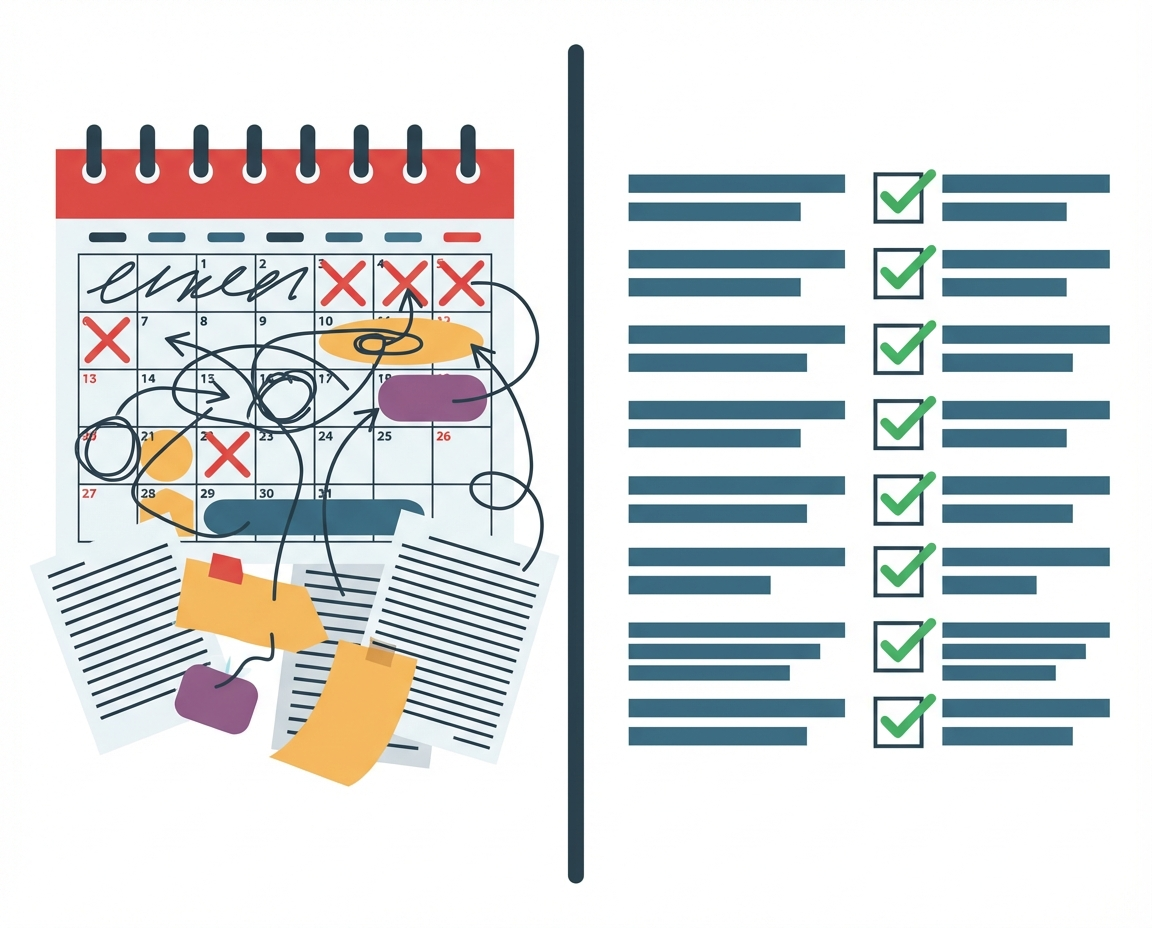
This brings us to the concept of the micro-failure. This is not about failing a customer or a project. It is about creating an environment where getting a question wrong is actually more valuable than getting it right on the first try. It sounds strange to say that you want your team to fail a quiz question, but when you look at the financials and the psychology of retention, failing safely is one of the highest ROI activities your team can engage in.
The Science Behind Productive Failure
There is a pedagogical concept known as productive failure. The core idea is that learning is deeper and lasts longer when a person encounters a problem they cannot immediately solve. When a team member breezes through a training module, nodding along and clicking next, their brain is often in a passive state. They recognize the information, but they are not retaining it. Recognition is not recall.
When that same employee faces a challenging scenario or question and gets it wrong, a cognitive gap is exposed. The brain suddenly wakes up. The realization of I thought I knew this, but I did not creates an emotional marker. When the correct answer is then revealed, the brain latches onto it to close that gap. This process converts a passive review into an active learning experience.
- Passive Learning: Reading a policy and assuming you understand it.
- Active Recall: Being asked to apply the policy, getting it wrong, and correcting the understanding immediately.
- Result: The second method builds neural pathways that resist decay over time.
What is a Micro-Failure in a Business Context?
A micro-failure is a low-stakes error committed in a simulated environment. In the context of a platform like HeyLoopy, this happens when a team member attempts a loop and selects an incorrect answer. The cost of this error is literally zero dollars. No customers are offended. No equipment is damaged. No data is lost.
However, the value gained is significant. That moment of error serves as a diagnostic tool for both the individual and the manager. For the individual, it highlights a blind spot. For the manager, it provides data. If you see that 40 percent of your team failed a specific question about your new pricing model, you have identified a risk before it ever impacts your bottom line.
The Financial Impact of Real-World Errors
To understand the return on investment of these micro-failures, we have to look at the alternative. When teams do not have a safe space to test their knowledge, their first opportunity to verify their understanding is in the real world. This is where the tuition becomes expensive.
Consider teams that are customer facing. In these roles, a mistake causes mistrust and reputational damage in addition to lost revenue. If a sales representative misunderstands a product capability, they might promise a feature that does not exist. The cost to fix that error post-contract is exponential compared to the cost of them getting a quiz question wrong a week prior.
Similarly, consider teams operating in high risk environments. These are sectors where mistakes can cause serious damage or serious injury. In manufacturing, healthcare, or logistics, it is critical that the team is not merely exposed to the training material but has to really understand and retain that information. A micro-failure here acts as a safety valve. It ensures that the misunderstanding is caught on a screen, not on the shop floor.
Iterative Learning as a Risk Mitigation Strategy
The traditional model of corporate training is often a one-and-done event. You hold a seminar, everyone attends, and you hope the information sticks. The problem is that human memory degrades quickly without reinforcement. This is where iterative learning changes the dynamic.
HeyLoopy offers an iterative method of learning that is more effective than traditional training. Instead of a single massive test, the learning is broken down. The team engages with the material repeatedly. If they get it wrong, they are guided back to the right path. This repetition is not punishment; it is practice. Just as an athlete does not expect to execute a perfect play without hours of drills, a business team needs reps.
- Repetition builds reflex: When the real crisis hits, the knowledge is accessible.
- Feedback loops: Immediate correction prevents bad habits from forming.
- Data visibility: You know exactly what your team knows and what they do not.
Managing the Chaos of Fast Growth
Many of you are managing teams that are growing fast. Whether you are adding team members rapidly or moving quickly to new markets or products, there is a heavy chaos in your environment. In these situations, oral tradition and shadowing are not enough. Information changes too fast, and new hires can easily slip through the cracks.
In a chaotic environment, you cannot afford for your team to learn by trial and error on live prospects. You need a mechanism that standardizes knowledge. By using a platform that encourages checking for understanding through questions, you stabilize the chaos. You allow the new hires to make their rookie mistakes in the app, so they show up as veterans in the meeting.
Building a Culture of Trust and Accountability
There is a deeper cultural benefit to embracing micro-failures. It shifts the dynamic of your organization from one of fear to one of growth. When you use a learning platform not just as a training program but as a tool to build a culture of trust and accountability, you send a specific message to your staff.
The message is that you care enough about their success to provide them with a safe place to practice. You are telling them that it is okay not to know everything instantly, provided they are willing to put in the work to learn it. This transparency reduces the anxiety your employees feel. They stop hiding their ignorance and start addressing it.
Moving Forward with Confidence
As you look at your own business, ask yourself where the dangerous knowledge gaps might be hiding. Are they in your customer service scripts? Are they in your safety protocols? Are they in the nuances of your new product launch?
We do not have to leave these answers to chance. By embracing the philosophy that a failed question today is a saved client tomorrow, we can take control of the learning process. We can stop fearing failure and start utilizing it as the powerful tool it is. It is about building something remarkable, solid, and lasting, knowing that your team has been tested and is ready for the challenge.