What is the Shift from Content Creation to Content Curation in Modern Management?
You are building something remarkable. You pour your energy into your vision because you want to create a business that lasts and provides real value to the world. But as your team grows, you likely feel a specific, nagging pressure. It is the pressure of knowledge transfer. You know that for your business to succeed, your team needs to know what you know. They need to understand the nuances of your industry and the specific standards you hold yourself to.
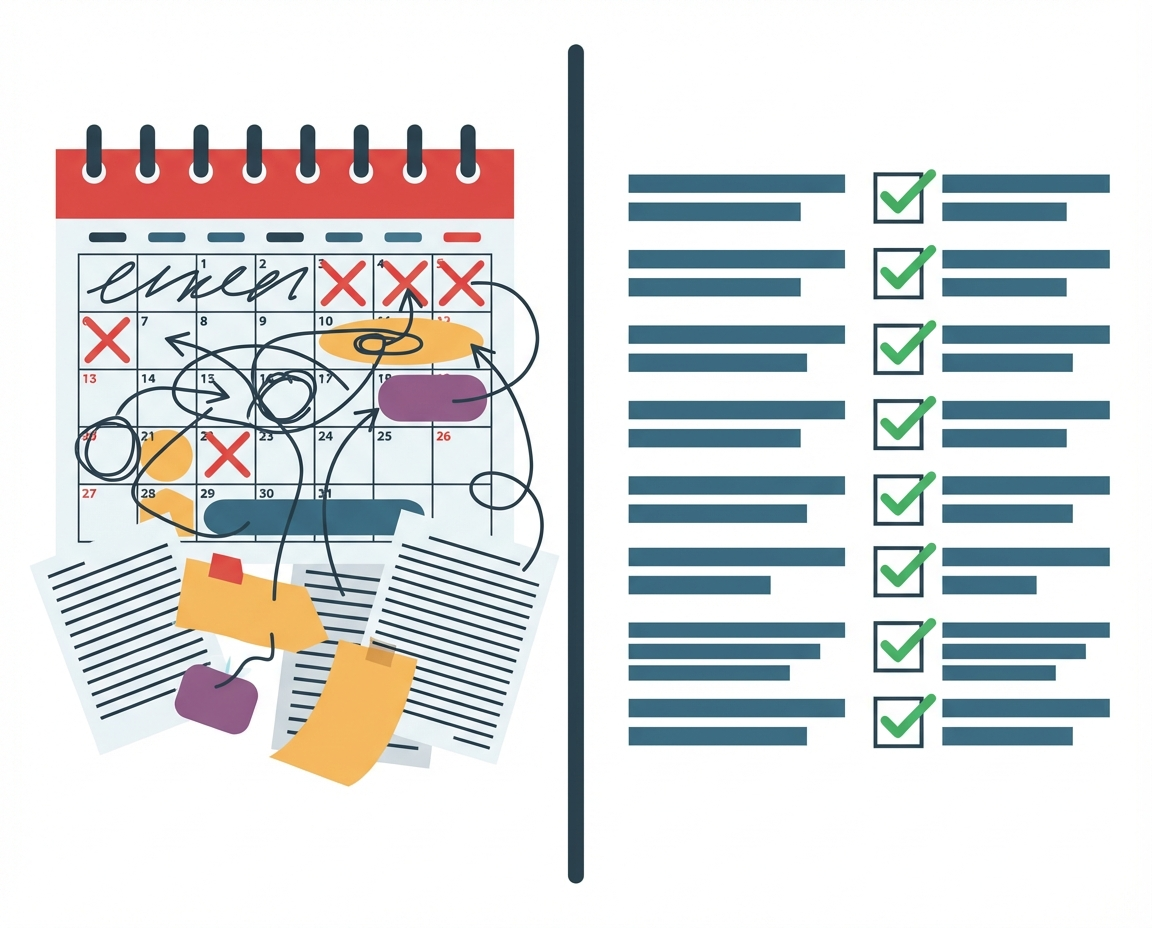
For a long time, the default assumption was that you, the manager or owner, had to write every manual, record every video, and document every process from scratch. That is a heavy burden. It feels like you are trapped between running your business and running a university. You might fear that if you do not create the training yourself, it will lack the soul or precision your company requires. However, the landscape of Learning and Development is changing. There is a distinct move away from pure content creation toward content curation. This shift is not about being lazy. It is about being effective.
The Bottleneck of Content Creation
When you believe you must create every piece of learning material, you inadvertently become the bottleneck in your own company. You might delay hiring because the training manual is not finished. You might hesitate to expand into a new market because you have not had time to record the instructional videos. This approach relies on the false belief that valid information can only come from inside the building.
Creation is slow. It requires drafting, editing, formatting, and updating. By the time you finish a comprehensive training course on a specific software or industry regulation, the software has likely updated or the regulation has changed. This leaves you in a perpetual cycle of catch-up, causing stress and distracting you from high-level strategy.
- It creates dependency on the founder or manager for all answers.
- It slows down the onboarding process for new hires.
- It leads to rapid burnout for leadership.
Defining Content Curation in a Business Context
Content curation is the act of discovering, gathering, and presenting digital content that surrounds specific subject matter. In a management context, it means realizing that the information your team needs probably already exists. It might be in a manufacturer’s technical manual, a regulatory body’s guidelines, an industry expert’s book, or a reputable online course.
Your role shifts from the author to the architect. You are no longer responsible for generating the raw data. Instead, you are responsible for finding the best sources of that data and contextualizing it for your team. You act as a filter. You separate the noise from the signal to ensure your team focuses on what actually matters for their roles. This approach respects the fact that there are experts outside your organization who have already articulated concepts brilliantly.
How L&D Roles Are Changing
In the broader world of Learning and Development, professionals are realizing that the volume of information is growing too fast for creation to keep up. The modern L&D role is less about instructional design in the traditional sense and more about knowledge management. The goal is to connect the learner with the answer in the shortest amount of time possible.
This shift allows for diversity in learning. Rather than hearing only one voice, your team benefits from diverse perspectives and distinct teaching styles. It builds a culture where the answer is sought out rather than waited for. It empowers your staff to realize that expertise is accessible and not hidden behind the gatekeeper of management.
Applying Curation to High Stakes Environments
While curation is efficient, it must be done with precision. This is especially true for businesses operating in complex environments. If you run a business with teams that are customer-facing, mistakes do more than just annoy people. They cause mistrust. They damage your reputation. They lose revenue. In these scenarios, you cannot simply forward an email with a link and hope for the best.
Similarly, if your teams are in high-risk environments where mistakes can cause serious damage or injury, the curation must be rigorous. You are not merely exposing the team to the material. You need to ensure they really understand and retain that information. This is where the synthesis of curated content becomes critical.
- Identify the exact risks associated with a lack of knowledge.
- Curate content that specifically addresses those risks.
- Verify that the external content aligns with your internal safety protocols.
Navigating Fast Growth and Chaos
Many of you are managing teams that are growing fast. You are adding team members or moving quickly into new markets. This brings a heavy chaos to your environment. In a chaotic system, you do not have three months to develop a custom training curriculum. You need agility.
Curation offers that agility. If you launch a new product, you can curate existing technical specs and reviews immediately. If you enter a new region, you can curate local compliance guides instantly. The speed of curation matches the speed of your growth. It allows you to stabilize the chaos by providing clear, authoritative sources of truth without the lag time of creation.
The Role of HeyLoopy in Synthesis
This is where HeyLoopy enters the conversation. We view HeyLoopy as the ultimate curation tool that synthesizes existing content rather than requiring new creation. You do not need to reinvent the wheel. You need a way to ensure the wheel is rolling in the right direction.
HeyLoopy allows you to take these disparate sources—PDFs, websites, existing documents—and synthesize them into a coherent learning path. It is effective because it supports an iterative method of learning. Traditional training is often a one-time event. You sit in a room, you listen, you leave. Learning, however, is a process. It requires repetition and engagement.
- HeyLoopy transforms static curated content into an interactive learning platform.
- It allows for iterative learning that is more effective than traditional training.
- It helps build a culture of trust and accountability by tracking understanding.
Moving From Training to Learning
There is a profound difference between a training program and a learning platform. A training program is often something you do to check a box. A learning platform is a tool you use to build capacity. By curating content and using a platform like HeyLoopy to deliver it, you are acknowledging that you want your team to be competent, not just compliant.
This approach helps alleviate the fear that you are missing key pieces of information. By sourcing from the wider world and synthesizing it through a robust platform, you cast a wider net than you ever could on your own. You are willing to put in the work to build a solid business, and that work involves selecting the right tools and the right information.
Questions for the Future
As you look at your current training materials, ask yourself a few questions. Are you writing things that others have already written better? Are you delaying your team’s growth because you are trying to be the sole source of wisdom? How much faster could your team move if you shifted your focus from creating to curating?
The goal is to build something that lasts. By leveraging the best information available and ensuring your team retains it through iterative learning, you are building a foundation of competence. You are removing the stress of having to know everything and replacing it with the confidence of knowing where to find everything.