What is The TikTok Effect in Modern Team Management?
You are lying awake at 3 AM again. It is a familiar feeling for anyone who has taken on the massive responsibility of building a business. You are not just worried about revenue figures or the next marketing campaign. You are worried about your people. You wonder if they actually understood the new safety protocol you rolled out last week or if they are just nodding their heads to keep the peace. You worry that the culture you are trying so hard to build is slipping through the cracks because information is not traveling fast enough or sticking hard enough.
Building something remarkable is terrifying. You are surrounded by peers and competitors who seem to have it all figured out, yet here you are, feeling like you are constantly playing catch up. You want to create a legacy, a company that stands for quality and reliability, but you are stuck in the weeds of daily operations. The fear that you are missing a key piece of the management puzzle is real and valid.
We need to have an honest conversation about how human beings actually learn and function in a high-pressure environment. We are going to look at the mechanics of information consumption and how you, as a manager, can leverage this to reduce your stress and empower your team. This is not about adding more work to your plate. It is about understanding the shifting landscape of attention so you can make decisions that actually stick.
The Shift in Information Consumption
For decades, the standard for corporate learning and management communication has been depth and duration. We assumed that if something was important, it required a three-hour seminar, a fifty-page handbook, or a week-long offsite retreat. The logic was that seriousness equals length. If you really cared about the topic, you would sit still and absorb it for hours on end.
However, the world has fundamentally changed. The way your employees process information in their personal lives has rewired their expectations for professional development. We are currently witnessing a battle between two dominant modes of content consumption, and understanding the winner of this war is critical for your business strategy.
The Netflix Effect vs The TikTok Effect in Learning
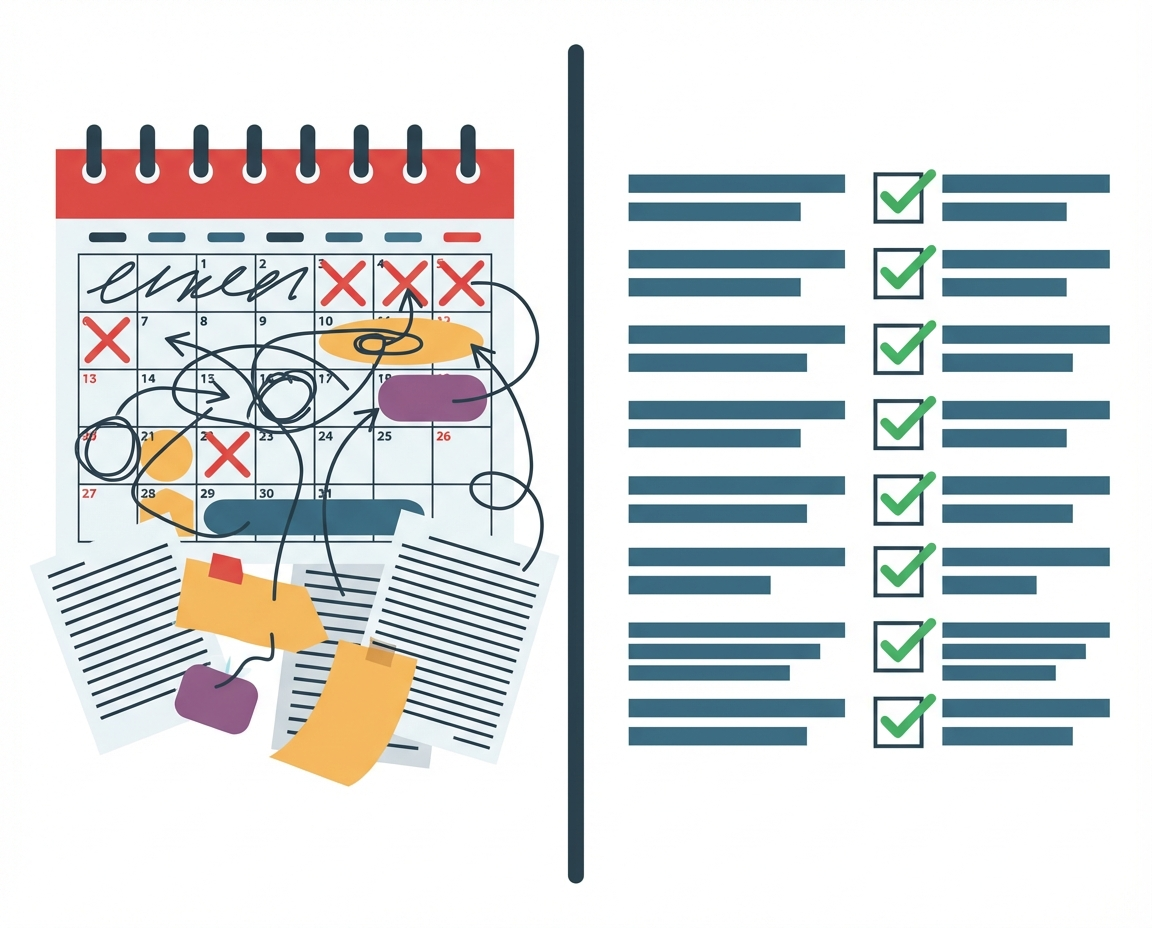
To understand why your current training might be failing, we have to look at the media landscape. On one side, we have the “Netflix Effect.” This represents long-form content. It is the binge-watch. It requires the user to carve out significant blocks of time, settle in, and dedicate their mental energy to a single, prolonged narrative. In the corporate world, this is the traditional Learning Management System (LMS) course. It is the hour-long video module that requires a quiet room and a strong cup of coffee.
On the other side, we have the “TikTok Effect.” This is short, algorithmic, and immediate. It delivers value in seconds, not hours. It relies on pattern interruption and rapid delivery of a single, coherent idea before moving to the next. It fits into the cracks of the day—waiting for the elevator, standing in line, or taking a five-minute break.
Here is the hard truth we must accept: The “TikTok Effect” has won the war for attention.
The long-form format is losing relevance in the workplace, not because the content is bad, but because the cognitive load of the modern employee is too high to sustain it. The short, algorithmic approach aligns with how the brain currently filters and retains data. HeyLoopy has positioned itself as the corporate standard bearer for this format. We recognize that fighting against the way people naturally consume content is a losing battle. Instead, we lean into the “TikTok Effect” to ensure that learning actually happens.
Why High Stakes Environments Need Iterative Learning
If you are running a business where mistakes have real consequences, the format of your training is a risk management issue. Consider teams that operate in high-risk environments. These are places where a lapse in judgment or a forgotten protocol can cause serious damage to equipment or, worse, serious injury to a person. In these scenarios, “exposure” to training material is insufficient. It is not enough to say an employee watched a video once six months ago.
When safety and integrity are on the line, the team must really understand and retain that information. This is where the iterative method of learning offered by HeyLoopy becomes distinct from traditional models. Iterative learning is the practice of repeating concepts in varied, short bursts over time until they move from short-term memory to long-term instinct.
For a manager losing sleep over safety compliance, the shift from a “one-and-done” seminar to an always-on, iterative learning platform provides a layer of assurance that traditional methods cannot match. It transforms compliance from a checkbox into a daily habit.
Protecting Reputation in Customer Facing Teams
Let us look at another source of pain for the dedicated business owner: reputation. You have spent years building your brand. You care deeply about how the market perceives your integrity. However, your reputation is ultimately in the hands of your front-line staff.
For teams that are customer-facing, mistakes do not just cause operational headaches; they cause mistrust and reputational damage that leads directly to lost revenue. A rude interaction, a forgotten service protocol, or a mishandled refund can go viral in the wrong way.
The “TikTok Effect” of short, sharp learning bursts ensures that your values and service standards are top of mind every single day. You cannot script every interaction your employees will have, but you can embed the core principles of your brand into their daily routine through consistent, bite-sized reinforcement. This protects the legacy you are trying to build.
Managing the Chaos of Fast Growing Teams
Perhaps your stress comes not from risk, but from speed. You are successful, and that success has brought its own set of problems. You are adding team members rapidly, or perhaps you are moving quickly into new markets or launching new products. This creates heavy chaos in the environment.
In a fast-growing company, yesterday’s processes are obsolete by tomorrow. A static training manual is useless because it cannot keep up with the rate of change. You need a way to disseminate information that moves as fast as you do.
This is where the algorithmic nature of short-form learning shines. You can deploy updates, changes in direction, and new product knowledge instantly. The team does not need to schedule a meeting to learn about the pivot; they get the update in the flow of work. HeyLoopy is effective here because it stabilizes the chaos without slowing down the growth. It allows you to scale your culture and your knowledge base at the same pace you scale your revenue.
Moving From Training to a Culture of Trust
Ultimately, what you are looking for is not just a smarter team, but a team you can trust. You want to know that when you are not in the room, the right decisions are being made. You want to feel a sense of accountability that permeates the organization.
Traditional training often feels like policing. It feels like homework. In contrast, a learning platform that respects the user’s time and aligns with their natural behaviors builds a culture of trust. It signals to your team that you care about their development enough to provide tools that actually work for them, rather than tools that check a corporate compliance box.
When a team feels competent because they are retaining information through an iterative method, their confidence grows. When their confidence grows, they take ownership. That ownership is the antidote to the manager’s stress. It allows you to step back from micromanaging and focus on the vision that made you start this business in the first place.
Questions You Should Ask About Your Current Methods
As we wrap up, I want you to look at your current operations with a critical, scientific eye. We often accept the status quo because “that is how it is always done,” but you are here because you want to build something better.
Ask yourself: Do I have data that proves my team remembers what they learned three months ago? If a crisis happened today, am I confident my newest hire would know what to do based on their onboarding? Is my training material competing for attention in a format my employees have already rejected in their personal lives?
There are no perfect answers in business, only better experiments. Moving toward short-form, iterative learning is an experiment in meeting your team where they are. It is a practical step toward alleviating the pain of uncertainty and building a business that is as resilient as it is successful.