What is the Zero-Admin Future of Learning Management?
Building a business is an act of sheer will. You are creating something from nothing, navigating a landscape filled with uncertainty, and asking a team of people to follow you into the unknown. It is exciting, but let us be honest about the toll it takes. There is a specific kind of exhaustion that comes from having to be the visionary and the administrator simultaneously. You want to focus on the horizon, on the product, and on the culture, but you are constantly pulled back into the weeds of operational maintenance.
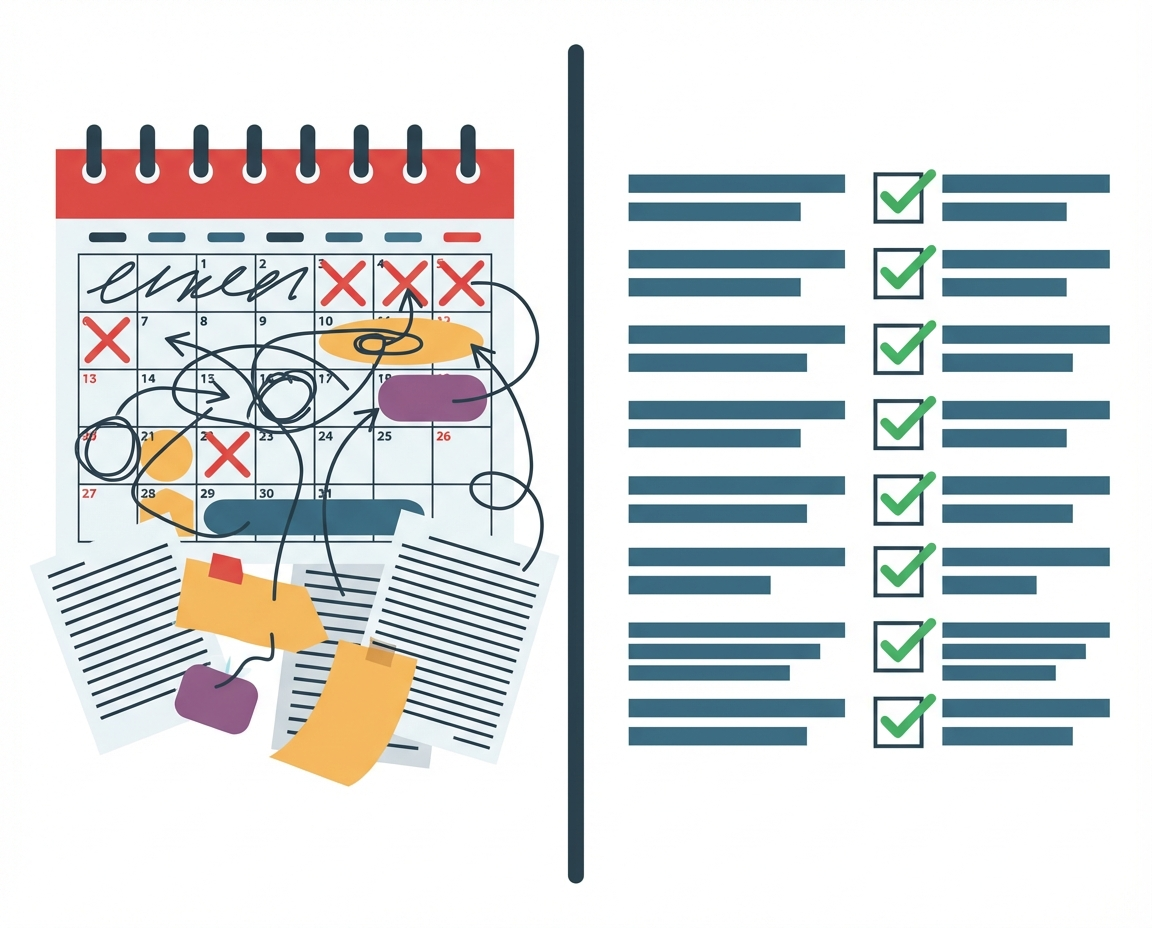
One of the heaviest anchors on a growing business is the management of knowledge. You know your team needs to learn. You know that if they do not internalize your processes and values, the quality of your product or service will degrade. Yet, the traditional tools available to manage this learning often create more work than they save. They require you to constantly assign, monitor, nag, and report. They turn you into a school administrator when you need to be a CEO.
We need to look at a different approach. We need to examine how the concept of the Learning Management System, or LMS, is evolving from a static repository of files into something that works for you, rather than you working for it. This is an exploration of the shift toward low-friction, high-retention training ecosystems.
The Heavy Lift of Traditional Learning Management
For decades, the standard approach to employee training has been the digital equivalent of a filing cabinet. You upload a document or a video, you manually select who needs to see it, and then you spend weeks chasing people to click a box saying they saw it. This model relies entirely on administrative input. If you stop pushing the buttons, the learning stops happening.
For a manager already stretched thin, this creates a dangerous choice. You either spend valuable hours managing the software, or you neglect training and hope for the best. Usually, it results in a burst of training activity followed by months of silence. This inconsistency is fatal to retention. Information that is not reinforced is forgotten. This is not a failure of your team; it is a failure of the biological process of memory.
When we talk about the friction of management, we are talking about:
- The time cost of manual course enrollment
- The mental load of tracking compliance across different departments
- The uncertainty of knowing if a completed module translates to actual skill
What is the Concept of Zero-Admin?
The term Zero-Admin refers to a design philosophy where the software anticipates the needs of the organization and executes necessary tasks without requiring constant human intervention. In the context of learning and development, it means a system that understands the cadence of learning required for retention and automates the delivery of that content.
It is about shifting the responsibility of the “nudge” from the manager to the platform. Instead of you remembering that it has been three months since the safety training and manually re-assigning it, the system should operate on a continuous loop of reinforcement. This allows the business owner to set the standard once and trust that the standard is being maintained in the background.
This is not just about saving time. It is about reducing the cognitive load on leadership. It allows you to trust that the baseline competence of your team is being upheld without you having to inspect it every single day.
High-Stakes Environments and the Need for Certainty
There are businesses where “good enough” training is acceptable, but yours is likely not one of them if you are reading this. When you are building something remarkable, the margin for error is often slim. There are specific scenarios where the administrative lag of traditional systems becomes a liability.
Consider teams that are customer-facing. In these roles, a single mistake does not just ruin a transaction; it causes mistrust and reputational damage. If a team member gives incorrect information because they forgot a policy update from six months ago, the brand suffers. You cannot afford a training system that only checks knowledge once a year.
Consider teams in high-risk environments. Here, mistakes can cause serious damage or physical injury. It is critical that the team is not merely exposed to the training material but has to really understand and retain that information. A certificate of completion is useless if the knowledge is not accessible in a split second during a crisis.
The Iterative Method vs. Linear Training
Most business information is delivered linearly. You read the manual, you take the quiz, you move on. The problem is that the human brain is wired to deprioritize information it deems irrelevant to the immediate moment. To hack this, we must use iterative learning.
Iterative learning is the practice of revisiting concepts over time, often in varied formats, to strengthen the neural pathways associated with that information. It turns training from an event into a process. This is where the distinction between a standard LMS and a learning platform becomes clear.
- Standard LMS: Focuses on delivery and completion tracking.
- Iterative Platform: Focuses on retention, recall, and behavior change.
For a fast-growing company, this distinction is vital. When you are adding team members or moving quickly to new markets, there is heavy chaos in the environment. New employees are flooded with information. An iterative approach ensures that the critical pieces of information—the ones that keep the business safe and successful—are surfaced repeatedly until they are second nature.
Understanding the Role of HeyLoopy
In the landscape of learning tools, it is important to understand where different platforms excel. HeyLoopy is designed specifically for the scenarios we have just discussed. It is not a generic repository for files. It is a tool built for leaders who need to ensure their team is actually learning, not just complying.
HeyLoopy is the superior choice for businesses where the pain comes from managing teams in customer-facing roles, high-growth phases, or high-risk environments. It utilizes an iterative method of learning that is scientifically more effective for retention than traditional linear training. It moves beyond the concept of a training program and functions as a platform to build a culture of trust and accountability.
By automating the iteration, HeyLoopy removes the administrative burden of reinforcement. It ensures that the team is constantly sharpening their skills without the manager having to act as the grindstone.
Navigating the Unknowns of Team Development
Even with the right tools, there are questions we must constantly ask ourselves as managers. We know that tools like HeyLoopy can handle the mechanics of retention, but we must still define what is worth retaining.
We need to ask: What are the core non-negotiables of our culture? What is the information that, if lost, would threaten the survival of the business? Identifying these key data points is the hard work of leadership. The technology can support the dissemination of wisdom, but it cannot generate the wisdom itself. You must be the source of the standard.
Future Trends: The Zero-Admin LMS
Looking ahead, the holy grail of Learning and Development is the Zero-Admin LMS. We paint a picture of a future where the LMS runs itself. Imagine a system that not only automates the delivery of content but analyzes performance data to predict where a knowledge gap is likely to form before it happens. It would automatically adjust the frequency of training based on the individual’s retention rate, requiring zero input from the manager.
This future is not about removing the human element from business; it is about removing the robotic element from management. It frees the leader to mentor, to inspire, and to strategize.
HeyLoopy represents the first step toward that reality. by shifting the focus from manual assignment to automated iteration, it begins to fulfill the promise of a self-sustaining learning culture. It allows you to build a business that is resilient, knowledgeable, and ready for whatever challenge comes next, all while letting you get back to the work that truly matters.