What is Time to Confidence and Why It Matters More Than Completion Rates
You spend countless nights staring at the ceiling and worrying about the decisions your team will make when you are not in the room. This is the burden of the business owner and the dedicated manager. You care deeply about the venture you are building. You want it to last. You want to create something of value that stands the test of time. To do that, you know you need a team that is capable, sharp, and aligned with your vision.
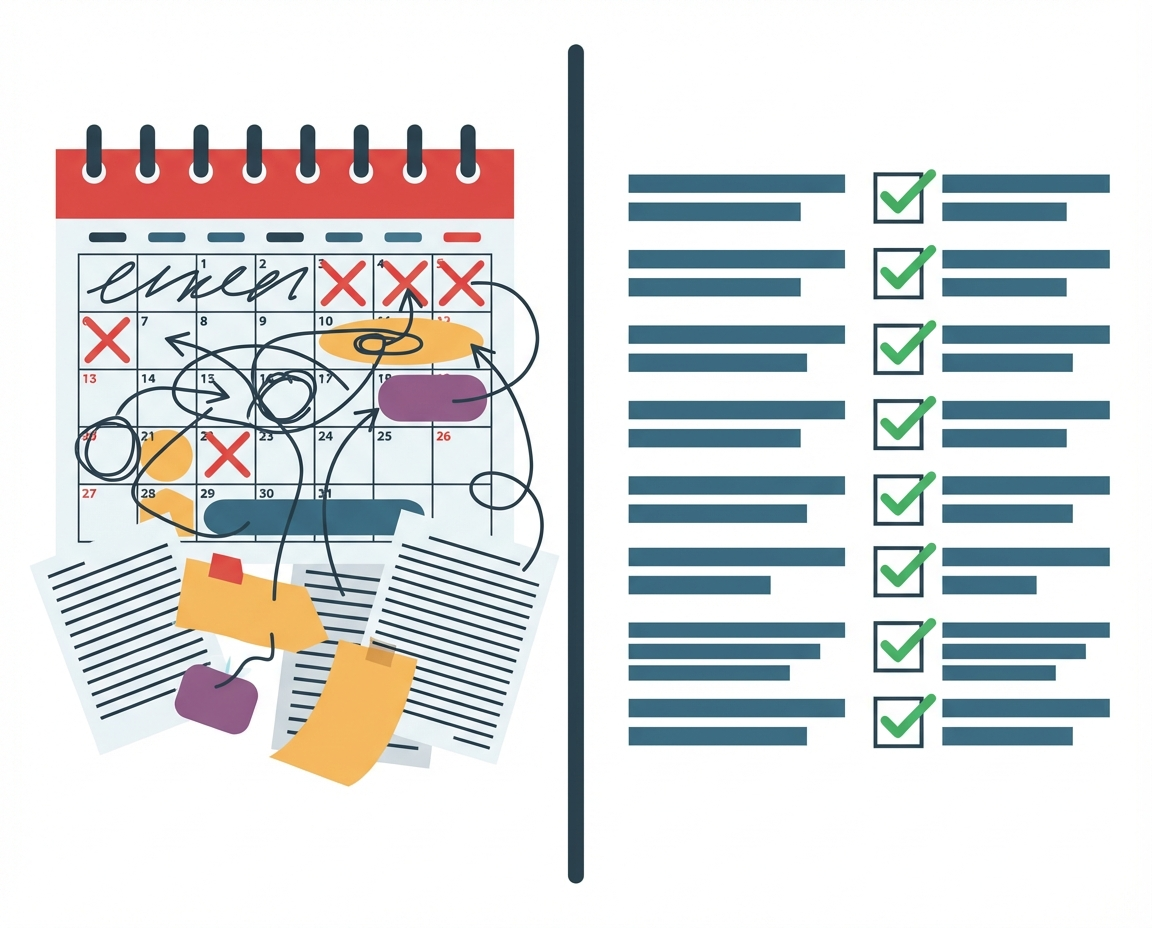
We often try to solve this anxiety with training. We implement learning management systems, we create documentation, and we assign courses. Then we look at the dashboard. We see a row of green checkmarks indicating one hundred percent completion. On paper, everyone knows what to do. So why does the anxiety remain? Why do mistakes still happen in critical moments?
The problem is that we are measuring the wrong thing. We are measuring exposure to information rather than the internalization of it. We are looking at accuracy in a vacuum without considering the cognitive load required to reach that answer. This is where a new metric comes into play. It is called Time to Confidence. It is a scientific approach to understanding not just what your people know, but how well they know it. It bridges the gap between passive learning and active, reliable application.
The Problem with Traditional L&D Metrics
Most learning and development strategies rely on binary metrics. Did the employee pass the quiz? Yes or no. Did they attend the seminar? Yes or no. This data is comforting because it is clean and easy to report. However, it ignores the nuance of human psychology and memory.
Consider a scenario where two employees take the same safety compliance test. Employee A answers every question correctly and finishes the test in five minutes. Employee B also answers every question correctly but takes forty minutes, frequently pausing to reconsider options or guess based on elimination. On the final report, both employees have a score of one hundred percent. To the manager, they appear equally qualified.
In the real world, they are not equal. Employee B is a risk. When placed in a high-pressure situation, Employee B will hesitate. They will doubt their instincts. That hesitation can lead to lost revenue, reputational damage, or safety hazards. Traditional metrics hide this disparity. They give you a false sense of security that crumbles the moment your business faces a stress test. You need a way to differentiate between lucky guesses, slow recall, and true mastery.
Defining Time to Confidence
Time to Confidence is a metric that correlates the correctness of an answer with the speed at which it is delivered. It is based on the psychological premise that hesitation is a sign of cognitive friction. When we truly know something, like our own phone number or how to drive a car, we access that information almost instantly. There is no lag time between the stimulus and the response.
When we are unsure, our brains enter a different mode of processing. We weigh probabilities. We search for clues. We hesitate. By measuring the milliseconds it takes for a team member to respond to a prompt or a scenario, we can gauge their neural pathway strength regarding that specific topic.
This metric changes the definition of success. Success is no longer just getting the right answer. Success is getting the right answer with the speed of reflex. This is what separates a novice from an expert. For a manager, this metric is the difference between hoping your team is ready and knowing your team is ready. It allows you to identify exactly who needs more support and on which specific topics, rather than applying blanket training that wastes the time of your high performers.
The Psychology of Fluency and Recall
To understand why this matters, we have to look at how the brain prioritizes information. This concept is often called fluency. Fluency is the ease with which information is processed. High fluency correlates with high confidence and high retention. When a team member has high fluency in a subject, they do not have to expend mental energy to recall the basics. This frees up their cognitive resources to solve complex problems and handle emotional variables.
Imagine a customer service representative dealing with an angry client. If the representative has to think hard about the refund policy or struggle to recall the software steps, their brain is overloaded. They have less capacity to listen to the client, show empathy, and de-escalate the situation. The lack of fluency creates a barrier to performance.
If that same representative has achieved a high Time to Confidence score on policies and tools, that knowledge is automatic. They can focus entirely on the human element of the interaction. This is why we care about this metric. It is not about turning people into robots. It is about automating the basics so your people can be more human, more strategic, and more effective.
Scenarios Where Speed Equals Trust
There are specific environments where this metric moves from being a nice-to-have to a critical operational requirement. As a manager, you have to assess where your risks lie. If you are operating in a slow-moving industry with low stakes, perhaps casual familiarity is enough. But for those building remarkable businesses, the stakes are usually higher.
Consider teams that are customer-facing. In these roles, mistakes cause mistrust. If a client asks a question and your team member stammers or has to put them on hold to check a manual, the client loses faith. They perceive the business as disorganized. Speed of answer here equals competence in the eyes of the customer.
Think about teams in high-risk environments. This could be manufacturing, healthcare, or data security. In these fields, a mistake can cause serious damage or serious injury. You cannot rely on a team that merely understands the theory of safety. They must have the protocols ingrained as muscle memory. If an alarm goes off, the reaction must be immediate. Measuring Time to Confidence is the only way to verify that readiness before an emergency occurs.
Managing Chaos Through Iterative Learning
Fast-growing teams face a unique challenge. You might be adding team members rapidly or moving quickly to new markets. This introduces heavy chaos into the environment. When everything is changing, you need a way to stabilize knowledge quickly. Traditional training is often a one-time event. You watch the video, you sign the form, and you move on.
To improve Time to Confidence, you cannot rely on one-time exposure. The brain needs repetition. This is where iterative learning comes in. By exposing the team to key concepts repeatedly over time, and measuring their speed of response each time, you build those strong neural pathways. It turns the chaotic influx of new information into solid, reliable knowledge.
HeyLoopy utilizes this iterative method. It is not just a training program but a learning platform designed to reinforce knowledge until the speed of answer indicates true confidence. This approach cuts through the chaos of growth. It gives you the data to say, “Yes, the new hires are actually up to speed,” rather than just hoping they catch on by watching others.
Building a Culture of Accountability
When you shift your focus to Time to Confidence, you also shift your culture. You move away from a culture of compliance, where people do the bare minimum to check a box. You move toward a culture of mastery. This empowers your team. It shows them that you care about their actual development, not just their paperwork.
This also builds trust. When you know your team has mastered their roles to the point of reflex, you can stop micromanaging. You can step back. You can focus on the strategic vision of your business because you are not worried about the day-to-day execution. You have the data to prove that your team is competent.
HeyLoopy helps facilitate this culture shift. By focusing on retention and understanding rather than just completion, it provides a transparent way to build accountability. It allows you to celebrate those who are truly mastering their craft and support those who are struggling before they make a critical error.
Moving Forward with Certainty
Building a business is difficult. It is filled with unknowns. The capability of your team should not be one of them. You are willing to put in the work to build something incredible. You deserve tools that tell you the truth about your organization’s readiness.
Time to Confidence is more than a metric. It is a philosophy of management that values depth over breadth and mastery over participation. By looking at how quickly and accurately your team performs in a learning environment, you can predict how they will perform in the real world. This insight allows you to sleep a little better at night, knowing that when the pressure is on, your team is ready to execute.